
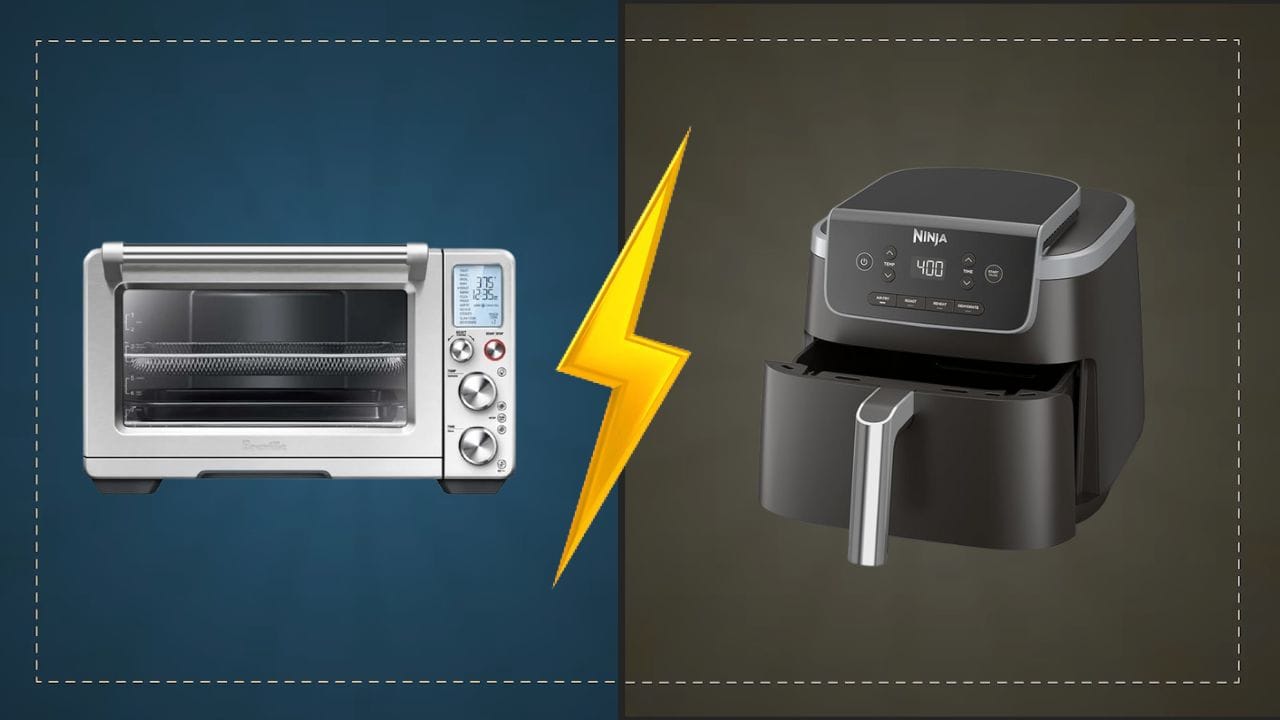
Undecided between an air fryer and a convection oven? Discover the fundamental differences, cooking performance, health impact, and energy efficiency. Our comprehensive analysis helps you choose the perfect appliance for your kitchen.
This is a review of Miss Berta Aaron. If you would like us to publish your review of any product, please contact us at reviewtoph@gmail.com
Introduction: The Hot Air Revolution in the Kitchen
Modern cooking is constantly evolving, and one of the most significant changes in the last decade is the widespread adoption of hot air cooking. At the heart of this trend are two appliances that dominate the market: the air fryer and the convection oven.
Both technologies have transformed how we cook, promising faster, healthier, and, most importantly, incredibly crispy meals. Yet, a question persists in the minds of many cooks, both amateur and experienced: what is the real difference between an air fryer vs convection oven? Are they interchangeable? Which one offers the best value, the best performance, or the best versatility for a family?
As culinary technology experts, we have conducted an in-depth analysis to demystify these two appliances. We will dissect the scientific principles that drive them, compare their performance across a variety of foods, evaluate their impact on your electricity bill and your health, and finally, guide you toward the appliance that best suits your specific culinary needs.
To illustrate our points, we will focus on two flagship models that represent the best of each category: the multifunctional countertop convection oven Breville Smart Oven Air Fryer Pro (BOV900BSS) and the dedicated air fryer Ninja Air Fryer Pro (AF141).
Get ready to discover everything you need to know to make an informed choice and transform your cooking experience.
Part 1: Understanding the Science – The Principle of Forced Convection
To understand the distinction between the air fryer vs convection oven, we must first grasp the concept of forced convection, the common engine for both appliances.
1.1. The Convection Oven: The Legacy of Uniform Cooking
The convection oven is a significant upgrade from the traditional oven, which uses static heat. In a classic oven, heat is transferred primarily by radiation and conduction, which inevitably creates hot and cold spots. This is why cookies on the top rack might burn while those on the bottom remain pale.
1.1.1. The Role of the Fan
The convection oven solves this problem by introducing a fan and an exhaust system into the cooking cavity. This fan circulates the hot air, forcing it to move around the food.
The benefits of this forced circulation are threefold:
1.Uniformity: The fan stirs the air, ensuring that every square inch of the food cooks at the same temperature. No more half-burnt cookie sheets.
2.Speed: Moving hot air transfers thermal energy much more efficiently than static air. This means you can generally cook your dishes at a lower temperature and/or in less time (often 25% less than static cooking).
3.Enhanced Browning: The constant airflow quickly removes moisture from the food’s surface. This superficial dehydration is essential to trigger the Maillard reaction (the chemical process that gives food its golden color and complex flavors), which is perfect for roasting poultry or achieving a crispy crust on bread.
1.1.2. Standard Convection vs. True Convection
It is important to note the nuance between models:
•Standard Convection: The fan circulates air heated by the oven’s main top and bottom elements.
•True Convection (or European Convection): A third heating element is placed around the fan itself. This allows the air to be preheated before it is blown into the cavity, providing even more precise heat and faster preheating.
1.2. The Air Fryer: The Turbo of Convection
If the convection oven is a sophisticated central heating system, the air fryer is a personal turbo heater.
The air fryer is, in essence, an ultra-compact and hyper-efficient convection oven. The fundamental difference is not in the principle (convection) but in the intensity and concentration of that principle.
1.2.1. The “Air Fried” Effect
To mimic deep frying, the air fryer must create an environment where heat aggressively and instantly hits the food’s surface, just as hot oil would. It achieves this through three key elements:
1.Minimal Cooking Chamber: The small size of the chamber reduces the volume of air to be heated, allowing for near-instant preheating.
2.High-Speed Fan: The fan is often much more powerful and spins at a considerably higher speed than that of a standard convection oven.
3.Proximity and Concentration: The heating element is located very close to the food, and the airflow is precisely directed around a perforated basket.
This combination creates a “turbo-convection” effect: hot air is propelled at lightning speed, maximizing heat transfer and dehydrating the food’s surface in record time. This is what gives fries or chicken wings that crispy, golden texture, without the excess fat.
Part 2: Air Fryer vs Convection Oven – Key Technical Differences
The comparison between the air fryer vs convection oven boils down to a matter of scale, speed, and versatility.
2.1. The Question of Size and Capacity
This is the most obvious difference and often the deciding factor for buyers.
2.1.1. The Convection Oven: The Master of Capacity
Countertop convection ovens are designed for versatility and volume. They can often replace a traditional wall oven for small households or serve as a secondary oven for large families.
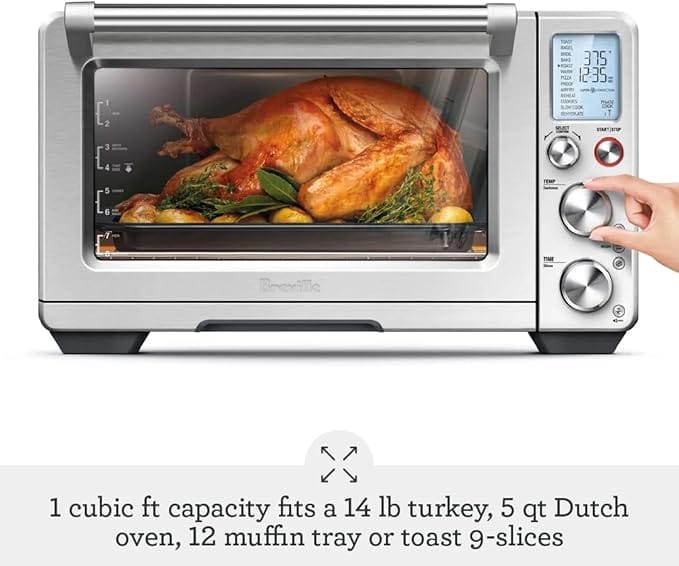
•Example: The Breville Smart Oven Air Fryer Pro (BOV900BSS) This model perfectly illustrates large capacity. With an internal volume of about 1.0 cubic foot (28 liters), it can accommodate a 14-lb turkey, a 12-cup muffin tray, or a 13-inch pizza. Its size allows for cooking multiple dishes simultaneously, which is essential for preparing a large meal.
2.1.2. The Air Fryer: The Small-Batch Specialist
Air fryers are compact countertop appliances optimized for speed, not volume. They are perfect for individual portions or small side dishes.
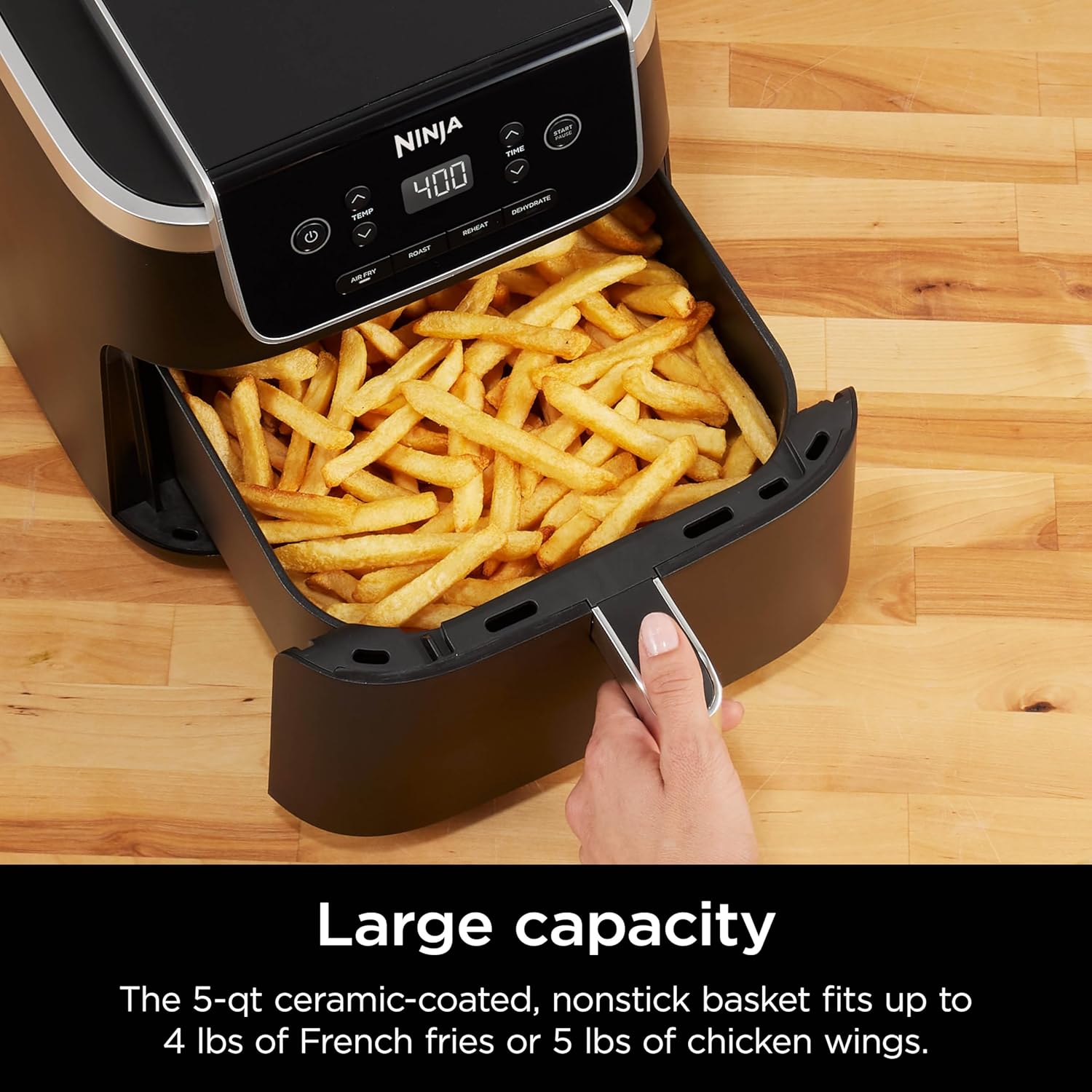
•Example: The Ninja Air Fryer Pro (AF141) This model offers a capacity of 5 quarts (4.7 liters). It is ideal for cooking up to 4 pounds of fries or chicken breasts for two to three people. Its small size is an advantage for preheating and efficiency but a limitation for large meals.
| Feature | Air Fryer (Ex: Ninja AF141) | Convection Oven (Ex: Breville BOV900BSS) |
| Average Volume | 3 to 6 quarts | 20 to 40 liters |
| Best For | Snacks, side dishes, 1-2 person meals | Full meals, bulky roasts, baking |
| Footprint | Low to moderate | Significant (requires dedicated counter space) |
| Multi-Level Cooking | Generally no (single basket) | Yes (multiple racks) |
2.2. Airflow Speed and Intensity
As we have seen, air speed is the factor that truly distinguishes the two.
•Air Fryer: The airflow is aggressive and targeted. It hits the food from all sides with maximum force, which is ideal for creating a crispy crust quickly. This is why it excels at cooking breaded or frozen foods.
•Convection Oven: The airflow is uniform and progressive. It is designed to ensure even cooking over a large volume. While the Breville BOV900BSS has a “Super Convection” mode that increases fan speed to mimic the air fryer effect, it cannot match the concentrated intensity of a dedicated appliance like the Ninja AF141 for very small batches.
2.3. Energy Consumption and Preheat Time
Energy efficiency is an increasingly important criterion.
2.3.1. The Power Myth
Both appliances often have similar electrical power ratings. The Breville BOV900BSS is rated at 1800 watts, and the Ninja AF141 is in a comparable range (often between 1400 and 1700 watts). The difference in efficiency, therefore, does not come from maximum power, but from the duration of use.
2.3.2. The Cooking Time Advantage
The air fryer is the champion of efficiency for small quantities for two reasons:
1.Preheating: It only needs 2 to 3 minutes to reach temperature, compared to 10 to 15 minutes for a countertop convection oven.
2.Cooking Duration: Due to its intense airflow, it cooks food 20% to 30% faster than the convection oven.
Energy Conclusion: To cook a small serving of fries, the air fryer uses less energy because it is on for a much shorter total duration. However, if you use the convection oven to cook a full meal on multiple racks, its efficiency per volume cooked becomes very competitive. The air fryer does not replace the efficiency of a convection oven for large meals.
Part 3: Cooking Performance – Which Does What Best?
The true measure of a cooking appliance is the result on the plate. We compared the two on the most popular food categories.
3.1. The Crisp Test: Fries, Chicken Wings, and Snacks
This is the air fryer’s specialty.
•Winner: The Air Fryer. The intense airflow of the Ninja AF141 creates a dry, crispy outer layer that best mimics deep frying. For fries (fresh or frozen), nuggets, spring rolls, or breaded vegetables, the air fryer is unmatched in texture and speed. The perforated basket ensures that air circulates around the food 360 degrees, avoiding the “soggy” bottom that can sometimes occur on an oven tray.
•The Convection Oven: The Breville BOV900BSS, with its “Super Convection” mode, produces excellent crispness, far superior to a static oven. Its advantage is the ability to cook a large quantity at once, which is crucial for large gatherings. However, for a small portion, the Ninja AF141 is faster and produces a slightly more uniform crisp.
3.2. Baking and Pastries: The Art of Precision
Baking requires stable, gentle heat to allow cakes to rise evenly and bread to develop a perfect crumb.
•Winner: The Convection Oven. The convection oven is the superior choice for baking. The fan ensures uniform cooking, preventing edges from burning before the center is done. The Breville BOV900BSS, in particular, is designed for this. It features precise temperature control (PID) and a Proof function that maintains a low, stable temperature, essential for bread dough rising. The large capacity also allows for standard-sized molds and trays.
•The Air Fryer: The air fryer is too aggressive for most delicate pastries. The intense heat and airflow can cause the exterior to brown too quickly or the rise to be uneven. While some small cakes or muffins can be cooked, the air fryer is not the tool of choice for precision baking.
3.3. Roasting Meats and Poultry
Roasting requires balancing skin browning with internal moisture retention.
•Winner: The Convection Oven. For large cuts of meat (whole chicken, beef roast, turkey), the convection oven is essential. The large capacity of the Breville BOV900BSS allows for roasting a 14-lb turkey, and the airflow ensures a uniformly crispy skin over the entire surface. The reduced cooking time (thanks to convection) helps seal in juices faster, resulting in juicier meat.
•The Air Fryer: The air fryer is excellent for roasting small cuts of meat (chicken breasts, small pork roasts under 2 pounds). It produces an exceptional crust, but its capacity limits its use to small portions.
3.4. Specialized Functions: Dehydration and Slow Cooking
These functions illustrate the difference in versatility between the two appliances.
•Winner: The Multifunctional Convection Oven. The Breville BOV900BSS is a true Swiss Army knife. It offers a Dehydrate function with large capacity, ideal for drying fruits or making jerky. More importantly, it includes a Slow Cook function, allowing dishes to simmer for hours at a low, stable temperature, thus replacing a dedicated slow cooker.
•The Air Fryer: The Ninja AF141 offers a dehydration function, but its small capacity makes it less practical for large quantities. It does not offer a slow cooking function.
Part 4: Health and Nutrition – Cooking Without Guilt
The health argument is one of the main reasons for the air fryer’s popularity.
4.1. Fat Reduction
Both appliances are healthier alternatives to deep frying, but the air fryer has a practical and psychological advantage.
•Deep Frying: Food absorbs 20% to 30% of its weight in oil.
•Air Fryer: Requires only a teaspoon of oil (or a spray) to coat the food, or no oil at all for already fatty or breaded foods. This allows for a fat reduction of 70% to 80% compared to classic frying .
•Convection Oven: Roasting also requires little oil, but to achieve the same level of crispness as the air fryer, one often tends to use a little more fat.
Health Conclusion: The air fryer is the champion of fat reduction while maintaining the “fried” texture.
4.2. Impact on Harmful Compounds (Acrylamide)
Cooking at high temperatures can lead to the formation of acrylamide, a potentially harmful compound, in starchy foods.
•Air Fryer: Studies have shown that air frying can reduce acrylamide formation by up to 90% compared to deep frying . This is attributed to the shorter cooking time and the way the hot air circulates, which allows the food to crisp without overheating the interior.
•Convection Oven: Although the convection oven is also safer than deep frying, the acrylamide reduction effect is less documented than that of the dedicated air fryer.
4.3. Nutrient Retention
Heat is the main factor in the degradation of sensitive nutrients (like Vitamin C). Since both appliances reduce cooking time compared to a static oven, they both contribute to better nutrient retention. The air fryer, by cooking small batches faster, may offer a slight advantage for these foods.
Part 5: In-Depth Analysis of Recommended Models
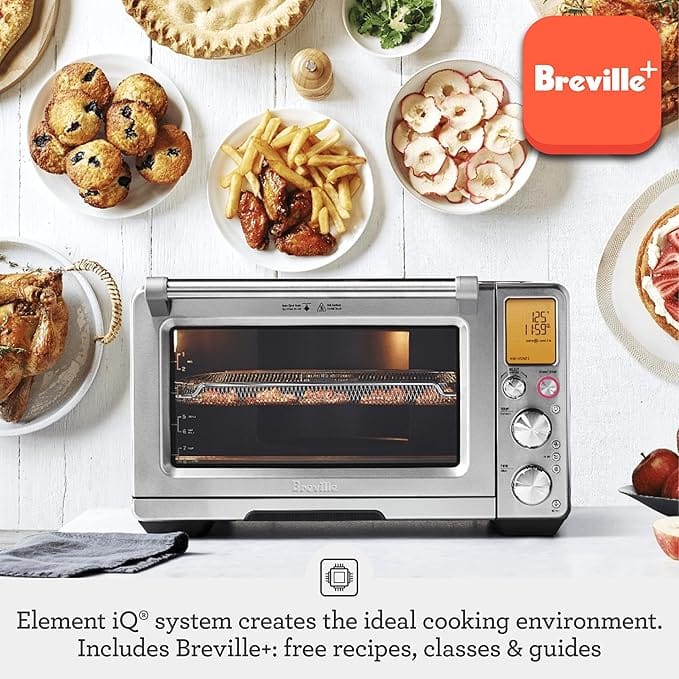
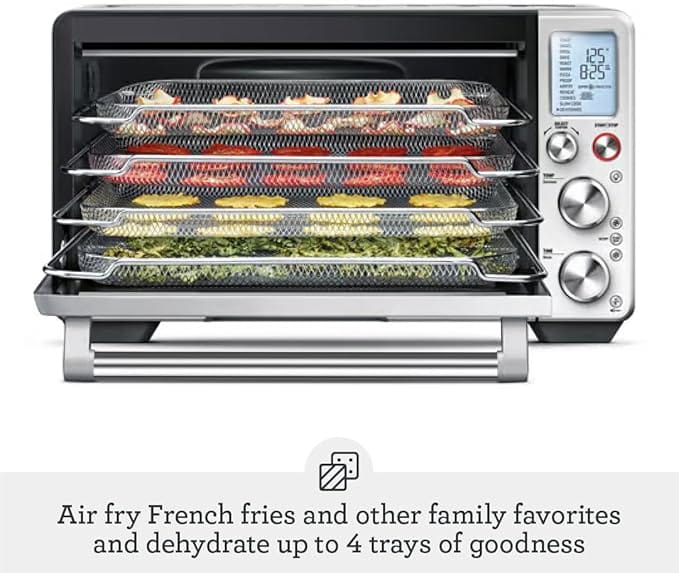
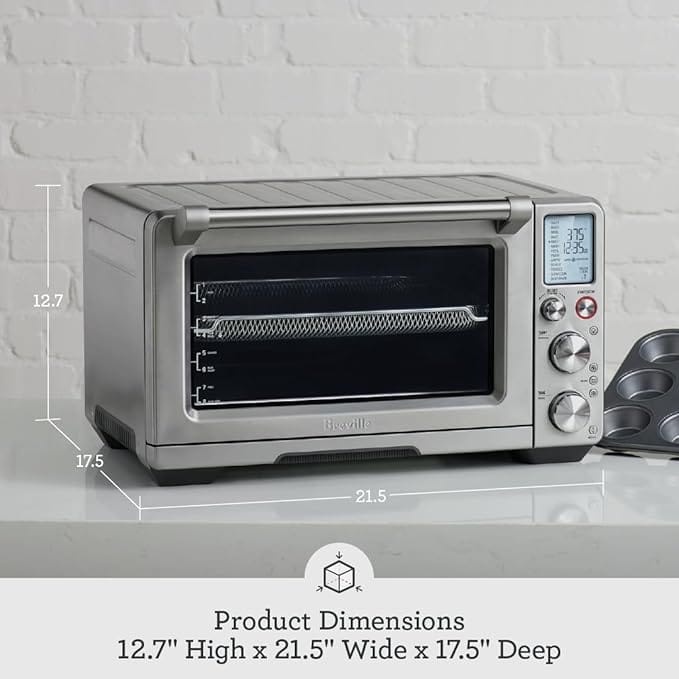
specs
⭐ Capacity: 1.0 cubic foot / large interior — fits nine slices of bread, 9×13″ pans, or larger dishes.
⭐ Power: 1800 watts for powerful heating and convection cooking.
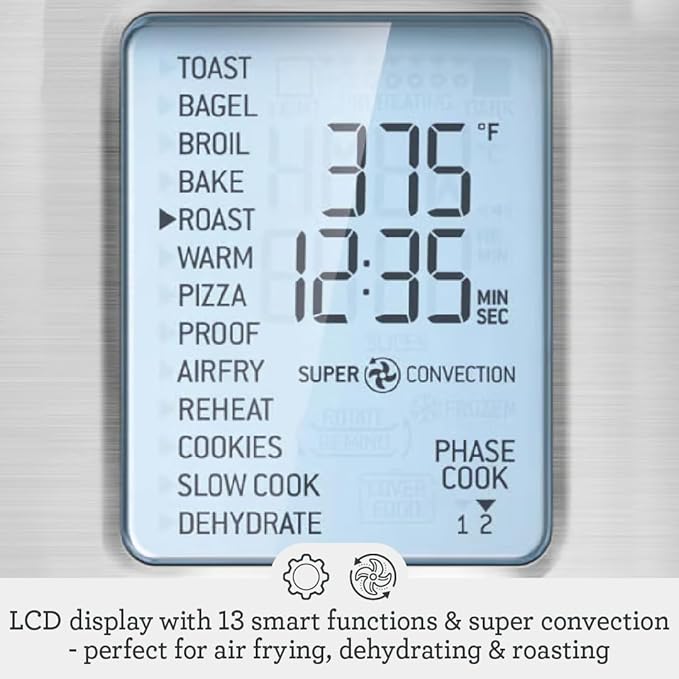
⭐ Functions: 13 cooking presets, including Air Fry, Bake, Roast, Toast, Dehydrate, Slow Cook, and more.
⭐ Technology: Element iQ® System & Super Convection for even heat distribution and faster cooking
pros
✅ Versatile all-in-one appliance: Replaces multiple kitchen tools — oven, air fryer, toaster, and dehydrator.
✅ Large cooking capacity: Roomy interior handles big meals and family-size dishes easily.
✅ Stable, consistent results: Smart heat management and convection deliver even baking and roasting.
✅ Premium build & user-friendly controls: High-quality materials and an intuitive LCD with knob control make it easy to use.
To help you solidify your choice, let’s take a closer look at the two appliances you selected.
5.1. The Reference Convection Oven: Breville Smart Oven Air Fryer Pro (BOV900BSS)
The Breville BOV900BSS is more than just a convection oven; it is a countertop cooking center designed to replace most other appliances.
5.1.1. Technical Features and Innovations
| Feature | Technical Detail | User Impact |
| Element IQ® Technology | Uses 6 independent heating elements and an algorithm to direct power where needed. | Ensures incredibly uniform cooking and eliminates hot/cold spots. |
| Super Convection | Dual-speed fan (standard and super) for intense air circulation. | Allows mimicking the air fryer effect for crispness, reducing cooking time by up to 30%. |
| PID Control | Proportional-Integral-Derivative temperature control. | Maintains internal temperature with extreme precision, crucial for baking and pastries. |
| Capacity | 1.0 cubic foot (28 L) | Allows roasting a 14 lb turkey or cooking on multiple levels. |
| Functions | 13 presets, including Air Fry, Proof, Dehydrate, Slow Cook. | Maximum versatility, replaces a slow cooker, dehydrator, and bread proofer. |
5.1.2. The Breville User Experience
The experience with the Breville is that of a premium appliance. The LCD screen is intuitive, and the dials allow for precise control. Its “Super Convection” function is Breville’s direct answer to the air fryer: it delivers impressive crispness, even if it is slightly slower than the dedicated appliance.
The Verdict: The Breville BOV900BSS is the choice for the expert who wants no compromise on capacity and versatility. It is perfect for those who regularly cook large meals or enjoy baking.
5.2. The Reference Air Fryer: Ninja Air Fryer Pro (AF141)
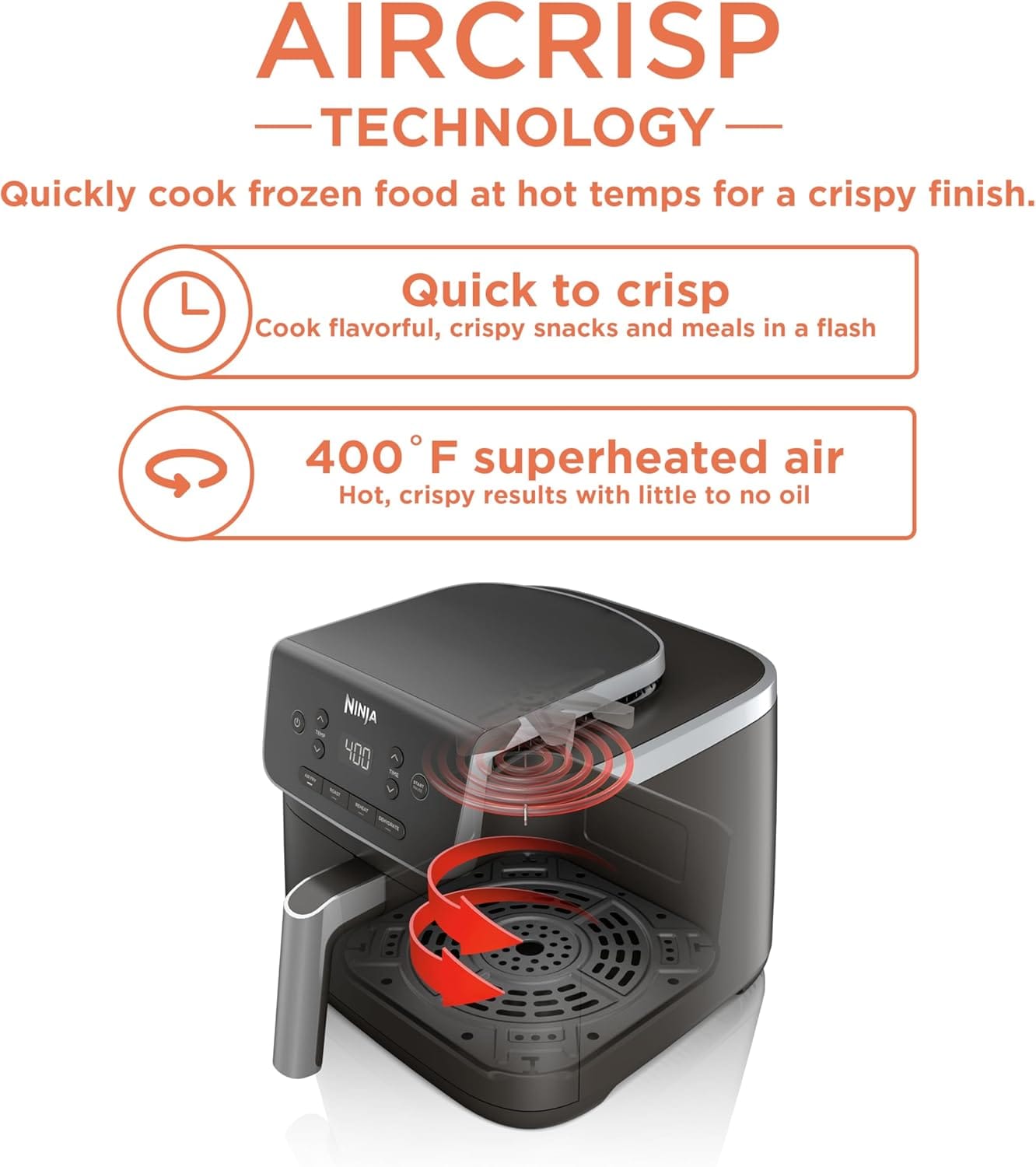
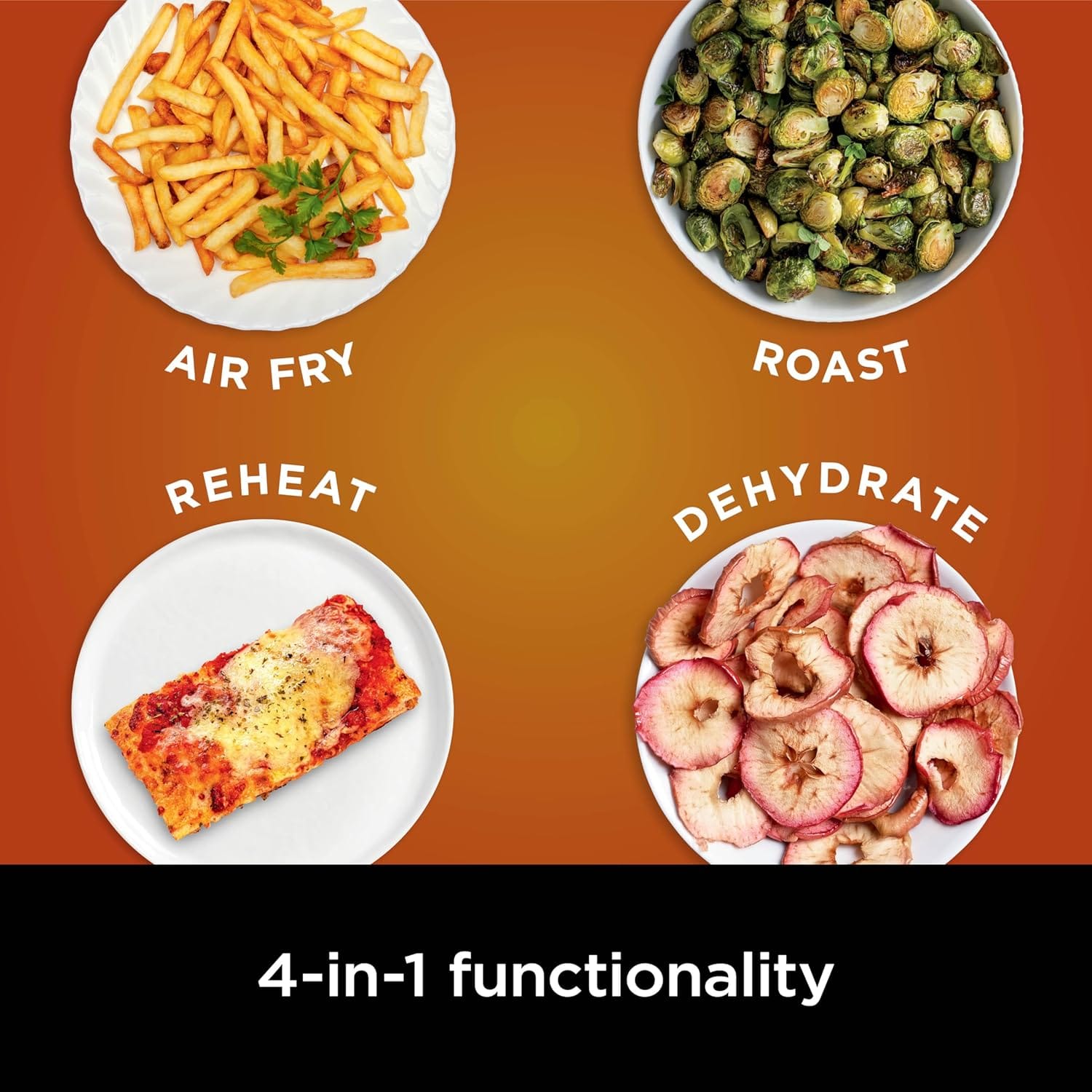
specs
⭐ Capacity: 5-Quart basket (fits up to 4 lbs of fries or 5 lbs of chicken)
⭐ Functions: Air Fry, Roast, Reheat, Dehydrate (4-in-1)
⭐ Max Temperature: Up to 400°F (205°C)
⭐ Technology: Air Crisp Technology with high-speed hot air circulation
pros
✅ Excellent cooking performance – delivers crispy, evenly cooked food
✅ Easy to use & clean – simple controls and non-stick, dishwasher-safe parts
✅ Compact but powerful – great capacity without taking much counter space
✅ Great value for money – premium results at a competitive price
The Ninja AF141 is a dedicated air frying appliance, optimized for speed and efficiency in its primary function: air frying.
5.2.1. Technical Features and Innovations
| Feature | Technical Detail | User Impact |
| Air Crisp Technology | Uses a powerful heating element and a very high-speed fan in a compact chamber. | Creates maximum crispness with minimal oil, mimicking deep frying. |
| Capacity | 5 quarts (4.7 L) | Ideal for meals for 2 to 3 people or side dishes. |
| Speed | Near-instant preheating. | Allows for quick meal preparation in under 15 minutes. |
| Functions | 4-in-1 (Air Fry, Roast, Reheat, Dehydrate). | Focused on functions that benefit from intense air circulation. |
| Cleaning | Non-stick basket and plate, often dishwasher safe. | Easy cleaning due to small size and coating. |
5.2.2. The Ninja User Experience
The experience with the Ninja is focused on simplicity and speed. It is perfect for weeknights when time is short. It excels at bringing leftovers back to life (pizza, fries) by making them crispy as new, a task where the convection oven is often less effective.
The Verdict: The Ninja AF141 is the choice for efficiency and speed. It is the perfect tool for small households, students, or as a complement to an existing wall oven for last-minute snacks and side dishes.
Part 6: The Cook’s Dilemma – How to Choose?
The choice between the air fryer vs convection oven is not a question of which is “better,” but which is “better” for you. Here is a guide to help you decide.
6.1. Usage Scenarios: When to Choose Which?
| Scenario | Recommendation | Justification |
| You do a lot of baking (breads, cakes) | Convection Oven (Breville BOV900BSS) | Requires stable heat, precise control (PID), and large capacity. |
| You cook for 4 people or more | Convection Oven (Breville BOV900BSS) | The 28 L capacity allows for cooking a full meal or multiple dishes simultaneously. |
| You want the fastest crisp possible | Air Fryer (Ninja AF141) | The turbo airflow and minimal preheating are unbeatable for small batches. |
| You have a small kitchen | Air Fryer (Ninja AF141) | Less bulky and easier to store. |
| You want to replace multiple appliances | Convection Oven (Breville BOV900BSS) | Integrated functions for dehydration, proofing, and slow cooking. |
| You frequently reheat leftovers | Air Fryer (Ninja AF141) | Restores perfect crispness to reheated food. |
6.2. The Final Verdict: Specialist vs. Generalist
•Choose the Convection Oven (Breville BOV900BSS) if: You need a versatile appliance that can handle baking, large roasts, and offers an excellent air frying function as a bonus. It is the ideal appliance for families and passionate cooks looking for a secondary oven or a wall oven replacement.
•Choose the Air Fryer (Ninja AF141) if: You need an appliance specialized in speed and crispness. It is the perfect tool for small households, students, or as a complement to an existing wall oven for last-minute snacks and side dishes.
Part 7: Beyond the Comparison – Maintenance and Durability
A kitchen appliance is an investment. It is crucial to consider its lifespan and ease of maintenance.
7.1. Ease of Cleaning
•Air Fryer (Ninja AF141): Cleaning is a breeze. The basket and cooking plate are small, non-stick, and often dishwasher safe. The small cooking chamber is easy to wipe down.
•Convection Oven (Breville BOV900BSS): Cleaning is more laborious. The large cavity is prone to roasting splatters. Although the accessories are removable, the oven interior requires regular and thorough cleaning to prevent grease buildup, especially around the heating elements and fan.
7.2. Durability and Materials
•Convection Oven: High-end models like Breville are built with robust materials (stainless steel) and are designed for a long lifespan. They are considered semi-permanent appliances.
•Air Fryer: Durability often depends on the quality of the non-stick coating on the basket. Improper use and cleaning can lead to premature wear of this coating. However, models from reputable brands like Ninja are generally very reliable.
Part 8: The Future of Hot Air Cooking
Forced convection technology continues to evolve. The current trend is toward convergence, where convection ovens are incorporating increasingly high-performing air frying functions.
Innovation is now focused on:
1.Moisture Control: The addition of steam functions in convection ovens to improve bread and roast cooking.
2.Artificial Intelligence: Sensors that automatically adjust time and temperature based on the weight and type of food.
3.Increased Energy Efficiency: Even faster heating systems and better insulation to minimize consumption.
Ultimately, whether you choose the crisp specialist (Air Fryer) or the versatile generalist (Convection Oven), you are investing in a cooking method that is faster, healthier, and more efficient than traditional methods. The choice comes down to the size of your kitchen, your family, and your passion for baking.




Whoa! This blog looks exactly like my old one! It’s on a totally different topic but it has pretty much the same layout and design. Wonderful choice of colors!