
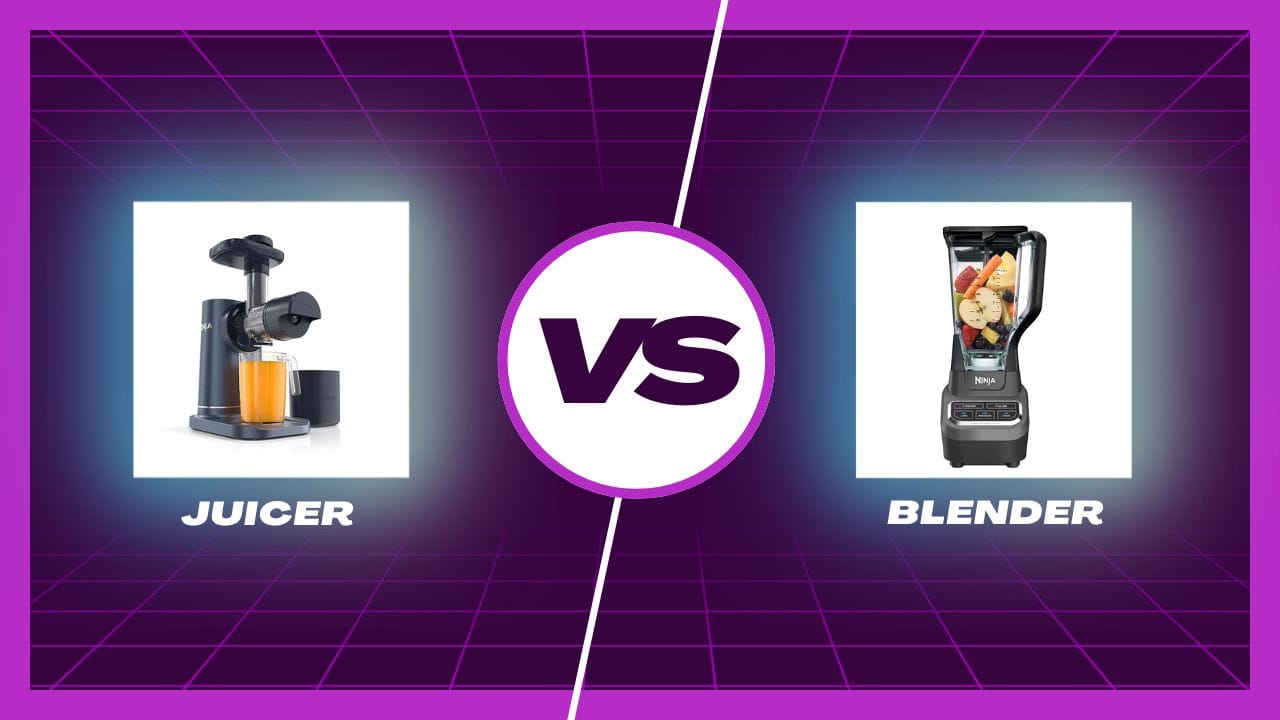
Join Raymond Logan’s personal journey to discover the truth about juicer vs blender. We break down the nutritional science, practical differences, and the pros and cons of both appliances to help you decide which is best for your health goals.
This is a review of Miss Berta Aaron. If you would like us to publish your review of any product, please contact us at reviewtoph@gmail.com
Introduction: The Quest for the Perfect Morning Ritual
My name is Raymond Logan, and for years, my kitchen counter was a battleground. On one side sat a powerful, hulking blender, promising creamy, thick smoothies. On the other, a sleek, slow-moving juicer, promising pure, vibrant liquid sunshine. Like many people trying to optimize their health, I was caught in the great debate: juicer vs blender.
I wasn’t just looking for a new gadget; I was looking for a lifestyle change. I wanted more energy, better digestion, and a simple, sustainable way to consume more fruits and vegetables. But which machine was the key?
I decided to put them both to the ultimate test. I dedicated three months to rigorous, side-by-side comparison, using two excellent examples of modern engineering: the Ninja NeverClog Cold Press Juicer (JC151NV) and the Ninja Professional Countertop Blender (BL610).
This isn’t a technical manual written by a lab technician. This is my story—a practical, hands-on account of the differences, the challenges, the triumphs, and the final verdict on which appliance truly deserves a permanent spot in your kitchen. If you’ve ever stood in the appliance aisle, paralyzed by choice, this is the guide you need.
Part 1: The Fundamental Difference – Fiber is the Key
Before I even plugged in the machines, I had to understand the core distinction. It all comes down to fiber.
1.1. The Blender: The Whole Package
When you use a blender, you are essentially taking whole fruits and vegetables—skin, seeds, pulp, and all—and pulverizing them into a smooth, drinkable consistency.
“A blender is a food processor that makes liquid. It breaks down the cell walls of the produce, but it keeps every single component. The result is a smoothie, a thick beverage that retains all the dietary fiber.”
This fiber is crucial. It’s the structural material in plants that our bodies can’t fully digest. It acts like a scrub brush in the digestive tract, promoting regularity and slowing down the absorption of sugar into the bloodstream.
1.2. The Juicer: The Essence Extractor
A juicer, on the other hand, is an extractor. Its sole purpose is to separate the liquid content—the water, vitamins, minerals, and phytonutrients—from the insoluble fiber (the pulp).
“Juicing is like pressing the ‘reset’ button on your digestive system. You get a highly concentrated shot of nutrients that are absorbed almost instantly because your body doesn’t have to work to break down the fiber.”
The result is a clear, thin liquid. While the pulp is often discarded (or repurposed, which I’ll discuss later), the liquid is a potent, nutrient-dense elixir.
1.3. Raymond’s First Revelation: The Volume Test
My first practical test highlighted the sheer volume difference. I took one large apple, a handful of spinach, and two carrots.
•Blender Result: The blender produced a thick, 16-ounce smoothie. It was filling, almost a meal replacement.
•Juicer Result: The juicer produced a potent, 6-ounce shot of juice. It was refreshing, but definitely not a meal.
The takeaway was immediate: Blending is about consuming the entire ingredient, which naturally limits how much produce you can physically drink before feeling full. Juicing is about concentrating the nutrients from a large amount of produce into a small, easily consumed volume.
Part 2: The Nutritional Showdown – Absorption vs. Satiety
The health debate between juicer vs blender is fierce, primarily revolving around two concepts: nutrient absorption and satiety.
2.1. The Fiber Factor: Satiety and Blood Sugar
The biggest pro for the blender is the retention of fiber.
•Satiety: The fiber in a smoothie makes it incredibly filling. I found that a blended breakfast kept me satisfied until lunch, preventing mid-morning snacking.
•Blood Sugar Control: Because the fiber is intact, it slows down the rate at which the natural sugars in the fruit enter the bloodstream. This is vital for anyone monitoring their sugar intake or looking for sustained energy.
2.2. The Nutrient Density Factor: Instant Absorption
The biggest pro for the juicer is the rapid delivery of nutrients.
•Digestive Rest: By removing the fiber, juicing gives your digestive system a break. The vitamins and minerals are immediately available for absorption, making it an excellent choice for therapeutic purposes or for those with sensitive digestion.
•Concentration: To get the same amount of concentrated nutrients found in a 6-ounce juice, I would have had to eat a massive bowl of raw vegetables, which is simply impractical for most people.
2.3. Raymond’s Health Goal Check
My personal goal was to increase my intake of dark leafy greens and root vegetables, which I rarely ate raw.
•Blender Challenge: I found it difficult to mask the taste of large quantities of kale or beet greens in a smoothie. The texture, even with a powerful blender, could sometimes be gritty or too thick.
•Juicer Triumph: The juicer made it effortless. I could juice a massive bunch of kale and a whole cucumber, and the resulting liquid was surprisingly palatable and easy to drink quickly.
Conclusion: If your primary goal is weight management and sustained energy, the blender wins due to fiber and satiety. If your goal is maximum nutrient intake and digestive ease, the juicer is the superior tool.
Part 3: The Appliance Deep Dive – Ninja JC151NV vs. Ninja BL610
To make a fair comparison, I needed to test machines that were excellent examples of their respective technologies. I chose two popular models from Ninja, a brand known for its power and reliability.
3.1. The Juicer: Ninja NeverClog Cold Press (JC151NV)
This is a masticating or cold press juicer, which is crucial. Unlike older centrifugal juicers that use high-speed blades, the JC151NV uses a slow-moving auger to crush and press the produce.
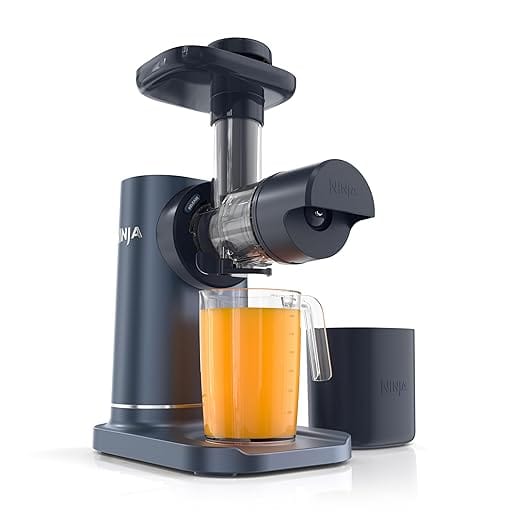
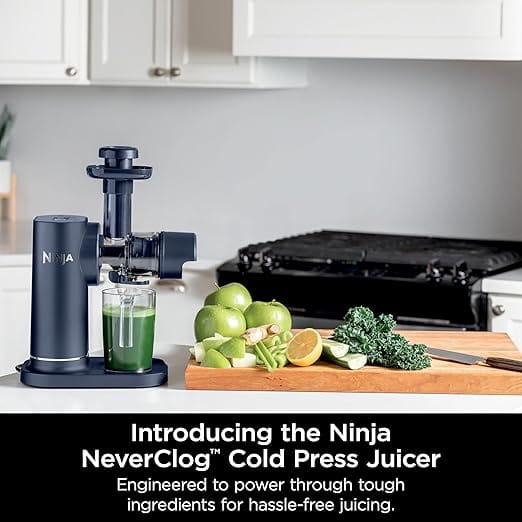
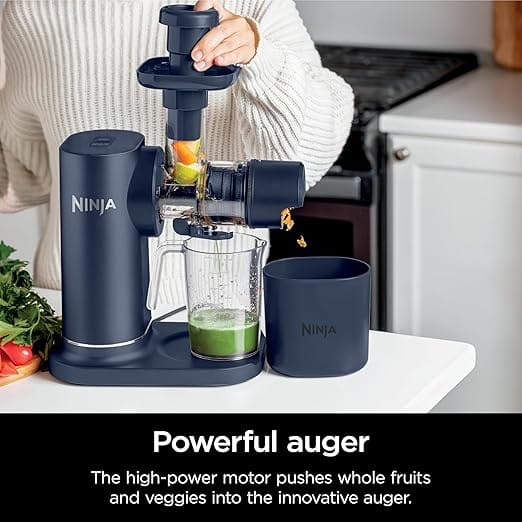
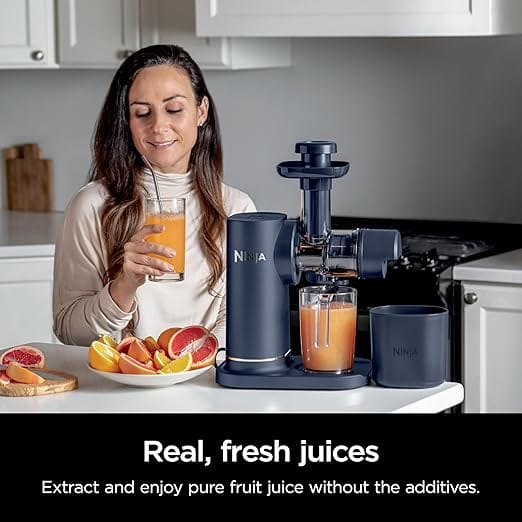
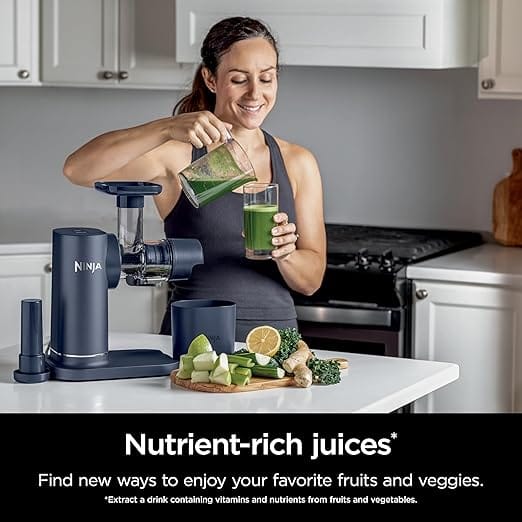
specs
⭐ Powerful Motor: High-torque motor base designed for powerful, non-stop cold-press juicing.
⭐ Pulp Control: Total Pulp Control with two interchangeable pulp filters (Less Pulp and Lots of Pulp).
⭐ Programs: 2 one-touch programs — Start/Stop and Reverse for easy use and clog prevention.
⭐ Dishwasher Safe: All parts that come into contact with juice are dishwasher-safe, simplifying cleanup.
pros
✅ Non-stop juicing performance that handles tough fruits and vegetables without clogging.
✅ Customizable juice consistency thanks to two pulp filters — choose less or lots of pulp.
✅ Easy one-touch operation makes juicing effortless even for beginners.
✅ Compact and easy to store design that fits comfortably on countertops.
Pros (Raymond’s Experience):
•Superior Yield: Because it presses slowly, it extracts significantly more juice from leafy greens and soft fruits than a centrifugal model. Less waste means more value from my expensive organic produce.
•Nutrient Preservation: The slow speed (around 60 RPM) minimizes heat and oxidation. The juice stays fresh longer—I could store it for up to 72 hours without significant degradation.
•Quiet Operation: Compared to the roar of a centrifugal juicer, the JC151NV hums quietly. I could make juice at 6 AM without waking my family.
Cons (Raymond’s Experience):
•Prep Time: I had to chop most of the produce into smaller pieces to fit the narrow chute. This added 5-10 minutes to my morning routine.
•Speed: The process is slow. It takes time for the auger to chew through the ingredients.
3.2. The Blender: Ninja Professional Countertop (BL610)
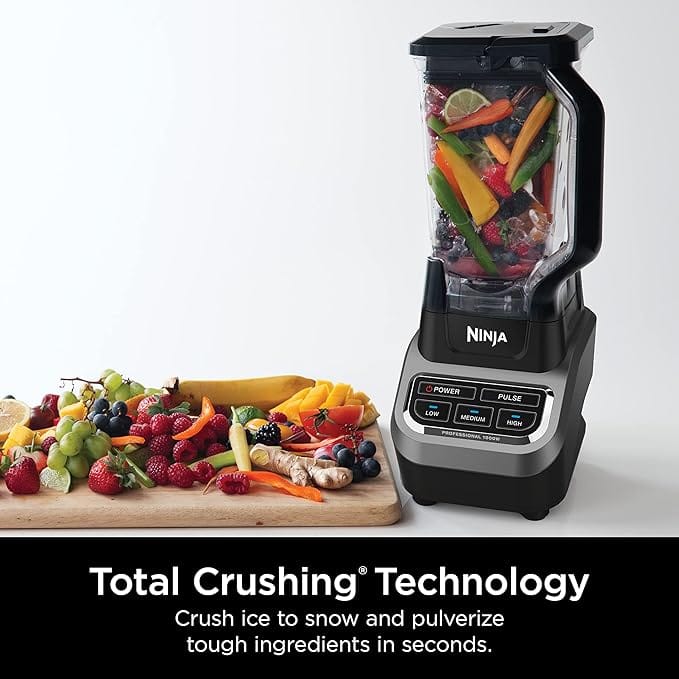
The BL610 is a classic, high-powered countertop blender designed for crushing ice and making large batches.
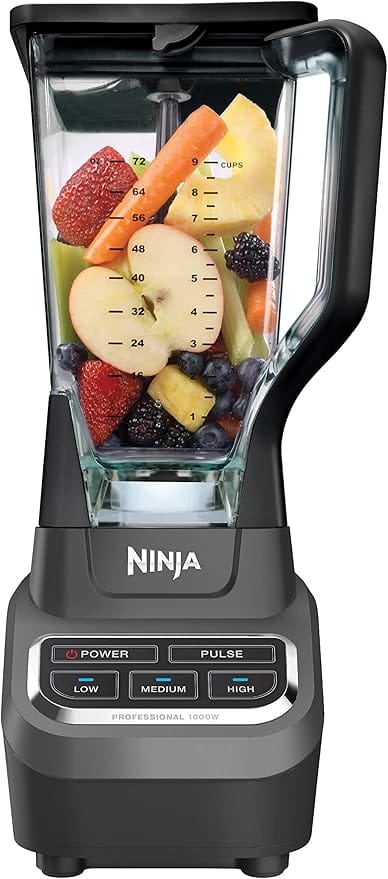
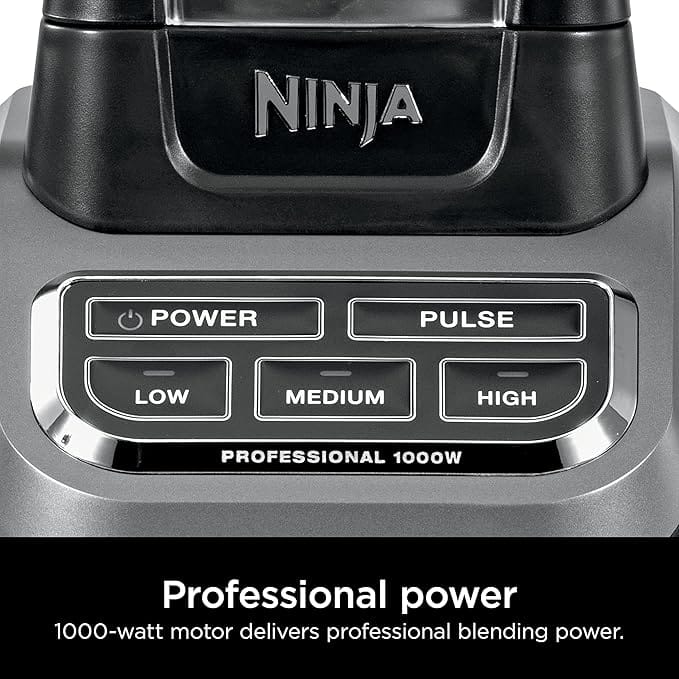

specs
⭐ Powerful Motor: 1000-watt professional-grade motor — strong enough to crush ice and blend tough ingredients.
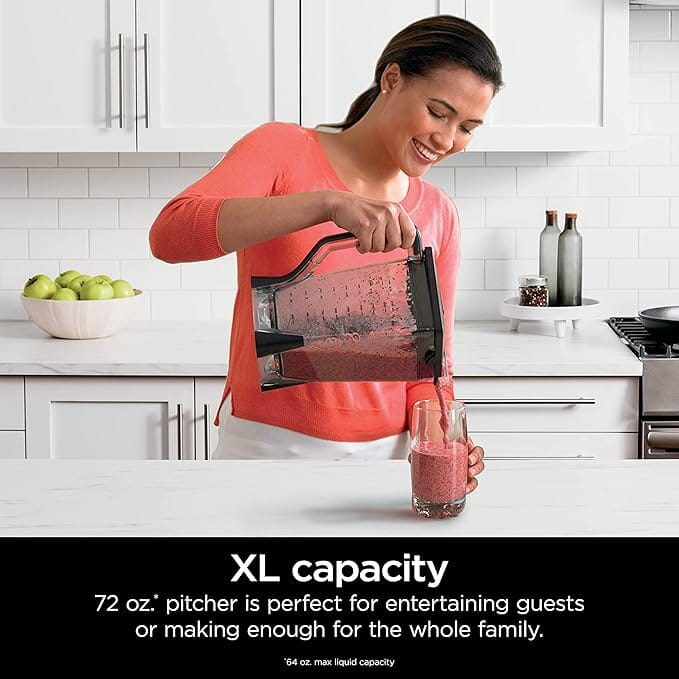
⭐ XL Pitcher Capacity: 72-ounce (about 2.1 L) pitcher — ideal for making smoothies, sauces, and larger batches at once.
⭐ Total Crushing Technology: Innovative blade system designed to pulverize ice, fruits, and veggies quickly and efficiently.
⭐ Dishwasher-Safe BPA-Free Pitcher: Pitcher and lid are BPA-free and easy to clean in the dishwasher.
pros
✅ Excellent ice-crushing performance: The Total Crushing Technology makes snow-like ice and smooth frozen drinks every time.
✅ Large capacity for families: The 72 oz pitcher lets you blend large servings without refilling.
✅ Simple, intuitive controls: Easy speed buttons and pulse function make operation straightforward for anyone.
✅ Easy to clean: Removable, dishwasher-safe components save time on cleanup.
Pros (Raymond’s Experience):
•Raw Power: With a 1000-watt motor and Ninja’s Total Crushing Technology (stacked blades), it pulverized ice, frozen fruit, and hard vegetables instantly. It lived up to its name—it crushed everything.
•Speed and Convenience: From start to finish, a smoothie took less than two minutes. Minimal chopping was required; I could toss in large chunks of fruit.
•Versatility: Beyond smoothies, the BL610 was excellent for making soups, sauces, and crushing nuts.
Cons (Raymond’s Experience):
•Noise: It was incredibly loud. A quick blast in the morning felt like setting off a small jet engine in the kitchen.
•Texture: While powerful, it sometimes struggled with very fibrous ingredients (like celery strings), leaving small, noticeable bits of fiber unless I blended for an extended period.
Part 4: The Practical Realities – Time, Cost, and Cleanup
The decision between juicer vs blender often comes down to practical factors that affect daily use.
4.1. The Time Commitment
| Task | Juicer (JC151NV) | Blender (BL610) |
| Ingredient Prep | High (must chop small) | Low (can use large chunks) |
| Processing Time | Slow (5-10 minutes) | Fast (1-2 minutes) |
| Total Time | 10-15 minutes | 5 minutes |
Raymond’s Insight: The blender was the clear winner for speed. On busy weekday mornings, the BL610 was my go-to. The juicer was reserved for weekends when I had time to enjoy the process.
4.2. The Cleanup Nightmare (or Not)
This is where the juicer often gets a bad reputation, but the modern design of the JC151NV helped mitigate this.
•Blender Cleanup: Simple. Rinse the pitcher and blades immediately, or toss the pitcher into the dishwasher (the BL610’s pitcher is dishwasher safe).
•Juicer Cleanup: More complex. The JC151NV is designed to be easy to clean, with dishwasher-safe parts and a “NeverClog” system. However, you still have to deal with the wet pulp and clean the auger and the fine mesh screen. It took me about 5 minutes of dedicated cleaning time, even with the best tools.
Raymond’s Insight: The blender was easier to clean, but the juicer’s cleanup was manageable, provided I did it immediately. Letting the pulp dry was a mistake I only made once.
4.3. The Cost of Ingredients and Waste
Juicing is inherently more expensive because you use more produce to get less volume, and you discard the fiber.
•Juicer Waste: The pulp. While I tried to repurpose it (adding carrot pulp to muffins, or composting), a significant amount of usable plant material was left over.
•Blender Waste: Virtually none. Every part of the fruit and vegetable is consumed.
Raymond’s Insight: The blender felt more economical and sustainable. The juicer felt like a luxury, a concentrated investment in high-quality nutrients.
Part 5: Raymond’s Recipes and Use Cases
My testing revealed that the machines aren’t competitors; they are complementary tools for different needs.
5.1. When the Blender is Unbeatable (The BL610)
The blender is the ultimate kitchen workhorse for thick, creamy, and filling creations.
•Meal Replacement Smoothies: Adding protein powder, nut butter, oats, and ice to a smoothie turns it into a complete, balanced meal. The BL610’s 1000 watts and stacked blades crushed ice and frozen berries effortlessly, creating a perfect, non-chunky texture.
•Nut Butters and Sauces: I used the BL610 to make homemade pesto and almond butter. The power was essential for breaking down hard nuts and seeds.
•Frozen Desserts: Making “nice cream” from frozen bananas was a quick, easy win for the blender.
5.2. When the Juicer is Essential (The JC151NV)
The juicer is the specialist for therapeutic and high-volume nutrient intake.
•Green Detox Shots: When I felt sluggish, a small, potent shot of ginger, lemon, and kale juice provided an immediate energy boost that a smoothie couldn’t match.
•Juice Cleanses: For periods when I wanted to give my digestive system a rest, the JC151NV provided the necessary nutrients without the bulk of fiber. The cold press technology was vital here, as the juice lasted longer.
•Hydration and Electrolytes: Juicing cucumber, celery, and watermelon created the most refreshing, hydrating drinks, perfect after a workout.
Part 6: The Final Verdict – Which is Best?
After three months of testing, using the Ninja JC151NV and the Ninja BL610 side-by-side, I can confidently answer the question: Which is better?
The answer is nuanced, but clear: The blender is the better all-around appliance for the average person.
6.1. Why the Blender Wins for Most People
The blender, exemplified by the powerful and versatile Ninja BL610, is the winner for several key reasons:
1.Versatility: It handles smoothies, soups, sauces, and crushing ice. It is a multi-tool.
2.Satiety: It keeps the fiber, making your drinks filling and beneficial for long-term health and weight management.
3.Economy: It uses the whole ingredient, minimizing food waste and maximizing your dollar.
4.Speed: It is significantly faster to prepare and clean, making it more likely to be used daily.
6.2. Why the Juicer is a Necessary Specialist
The juicer, like the excellent Ninja JC151NV, is not obsolete; it is a specialist tool for specific health goals.
“I realized the juicer isn’t meant to replace the blender; it’s meant to supplement it. It’s for the person who has already mastered the smoothie and now wants to take their nutrient intake to the next level, or for someone focused on therapeutic juicing.”
The JC151NV is a fantastic cold press juicer, offering high yield and quiet operation, solving many of the problems associated with older juicing technology. But its primary function is narrow.
6.3. Raymond’s Recommendation: The Best of Both Worlds
If you can only afford one appliance, buy a high-quality blender like the Ninja BL610. Its versatility and ability to retain fiber make it the most beneficial investment for daily health and kitchen utility.
If you are serious about maximizing your raw vegetable intake, are pursuing specific therapeutic health goals, and have the budget for both the appliance and the extra produce, then add a cold press juicer like the Ninja JC151NV.
| Feature | Blender (Ninja BL610) | Juicer (Ninja JC151NV) |
| Primary Output | Thick Smoothie (Meal Replacement) | Thin Juice (Nutrient Shot) |
| Fiber Retention | Yes (100%) | No (Removed as Pulp) |
| Speed | Very Fast | Slow |
| Cleanup | Easy/Fast | Moderate/Requires immediate attention |
| Best For | Weight Loss, Smoothies, Soups, Sauces | Detox, Rapid Nutrient Absorption, High Vegetable Intake |
| Verdict | Better All-Around Appliance | Better Specialist Tool |
Part 7: The Science Behind the Machines (Expanding the Narrative)
To truly understand the difference, we must look closer at the mechanics and the resulting chemical composition of the drinks.
7.1. The Mechanics of Mastication vs. Total Crushing
The Ninja JC151NV uses a slow, powerful auger that chews the produce. This mastication process minimizes air exposure, which is why it’s called “cold press.” Less air means less oxidation, which preserves the delicate enzymes and vitamins. This is why cold-pressed juice has a longer shelf life and a brighter color.
The Ninja BL610 uses Total Crushing Technology—a high-speed, multi-level blade system powered by 1000 watts. This process introduces a significant amount of air into the mixture, which is why smoothies often develop a foamy top layer. While this doesn’t destroy all nutrients, it does accelerate oxidation, meaning a smoothie should be consumed immediately for maximum benefit.
7.2. The Glycemic Index and Sugar Load
This is a critical point for health-conscious users.
When you remove the fiber (juicing), you are essentially drinking the fruit sugar (fructose) directly. Even though it’s natural sugar, it hits your bloodstream quickly, leading to a higher glycemic load compared to eating the whole fruit or drinking a smoothie.
Raymond’s Tip: When juicing with the JC151NV, I learned to focus heavily on low-sugar vegetables (celery, cucumber, kale) and use fruit sparingly (a single green apple or a slice of ginger) to keep the sugar load low. The blender, because it retains the fiber, is more forgiving with fruit content.
Part 8: The Practicalities of Pulp (Expanding the Narrative)
The pulp is the defining byproduct of the juicer, and dealing with it is a major part of the juicer vs blender experience.
8.1. The Pulp’s Nutritional Value
While the liquid contains the majority of the micronutrients, the pulp is rich in insoluble fiber and some residual nutrients. Discarding it feels wasteful, which is why the Ninja JC151NV comes with a large pulp container—it encourages repurposing.
Raymond’s Pulp Projects:
•Vegetable Pulp: I used carrot and beet pulp in vegetable broth, or mixed it into meatloaf and burgers to add moisture and hidden fiber.
•Fruit Pulp: Apple and berry pulp went into baking (muffins, quick breads) or was dehydrated to make fruit leather.
8.2. The Blender’s Advantage: Zero Waste
The blender completely bypasses the pulp problem. The only waste is the occasional stem or seed that you choose not to blend. This zero-waste approach is a huge psychological and environmental win for the BL610.
Part 9: Raymond’s Long-Term Health Outcomes (Expanding the Narrative)
After three months, I noticed distinct changes based on which machine I used most often.
9.1. The Juicing Effect (JC151NV Focus)
When I focused on juicing for a week, I felt an immediate, sharp increase in energy. It was a clean, vibrant feeling. My skin looked clearer, and I felt lighter. This was likely due to the massive influx of concentrated micronutrients and the temporary rest for my digestive system. However, I was hungry more often, and the cost of produce was noticeably higher.
9.2. The Blending Effect (BL610 Focus)
When I focused on blending, the changes were more subtle but more sustainable. My digestion was incredibly regular, and I maintained a stable energy level throughout the day without the peaks and crashes. I also found it easier to maintain my weight because the smoothies were such effective meal replacements.
9.3. The Synthesis
The best results came from using both: a quick, fiber-rich smoothie from the BL610 for breakfast, and a small, potent vegetable juice from the JC151NV in the mid-afternoon for a nutrient boost. They stopped being rivals and became partners in my health journey.
Part 10: Conclusion – The Right Tool for Your Health Journey
The debate over juicer vs blender is ultimately a debate over fiber vs concentration.
The Ninja Professional Countertop Blender (BL610) is the essential, versatile appliance for anyone starting their health journey, focused on satiety, weight management, and zero waste.
The Ninja NeverClog Cold Press Juicer (JC151NV) is the advanced tool for those seeking therapeutic benefits, maximum nutrient absorption, and the ability to consume vast quantities of raw vegetables effortlessly.
My journey with Raymond Logan’s test proved that both machines are excellent, but they serve different masters. Choose the one that aligns with your primary health goal, your budget, and your tolerance for cleanup. In the end, the best machine is the one you will use every single day.



[…] SCORE Who are its current market rivals? Check Price on […]
You have brought up a very wonderful points, regards for the post.
thank you