

Looking for the cheapest and best K-Cup coffee makers in 2026? Bobby Manuel shares his hands-on testing experience with the Keurig K-Elite, K-Mini, and K-Classic. Discover which machine delivers the perfect brew for your lifestyle in this comprehensive, real-world review.
Introduction: Why I Went Back to the Pod
My name is Bobby Manuel, and I’ll be the first to admit it: I used to be a coffee snob. I spent years perfecting my pour-over technique, weighing my beans to the gram, and timing my extractions with a stopwatch. I thought that was the only way to get a “real” cup of coffee. But then, 2026 happened. My schedule got tighter, my mornings got earlier, and suddenly, that 15-minute ritual felt less like a luxury and more like a barrier between me and my productivity.
I needed speed. I needed consistency. And frankly, I needed something that didn’t require a degree in chemistry at 6:00 AM. That’s when I decided to revisit the world of single-serve brewing. I wanted to find the best k cup coffee maker—not just the one with the most buttons, but the one that actually made a cup of coffee I’d look forward to drinking.
I didn’t just want to read reviews; I wanted to live with these machines. So, I cleared off my kitchen counter and spent the last few months testing three of the most iconic models in the Keurig lineup: the K-Elite, the K-Mini, and the K-Classic. I’ve brewed hundreds of cups, tested different pod brands, and even tried a few “hacks” to see which machine truly stands the test of time.
This isn’t a corporate brochure. This is my honest, unfiltered experience as a guy who just wants a great cup of coffee without the hassle. If you’re trying to decide which machine deserves a spot in your kitchen, here is everything I learned.
Part 1: The Contenders – Meet the Machines
When you’re looking for the best k cup coffee maker, you quickly realize that Keurig has a model for every possible scenario. I chose these three because they represent the “Big Three” of the single-serve world: the feature-rich powerhouse, the minimalist space-saver, and the reliable old-school workhorse.
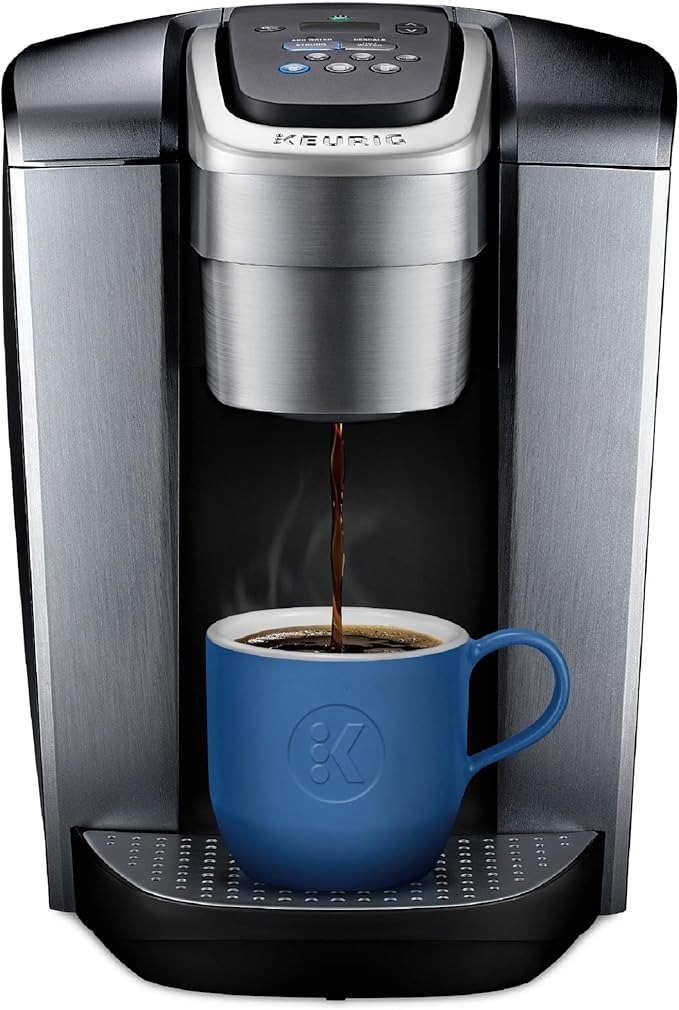
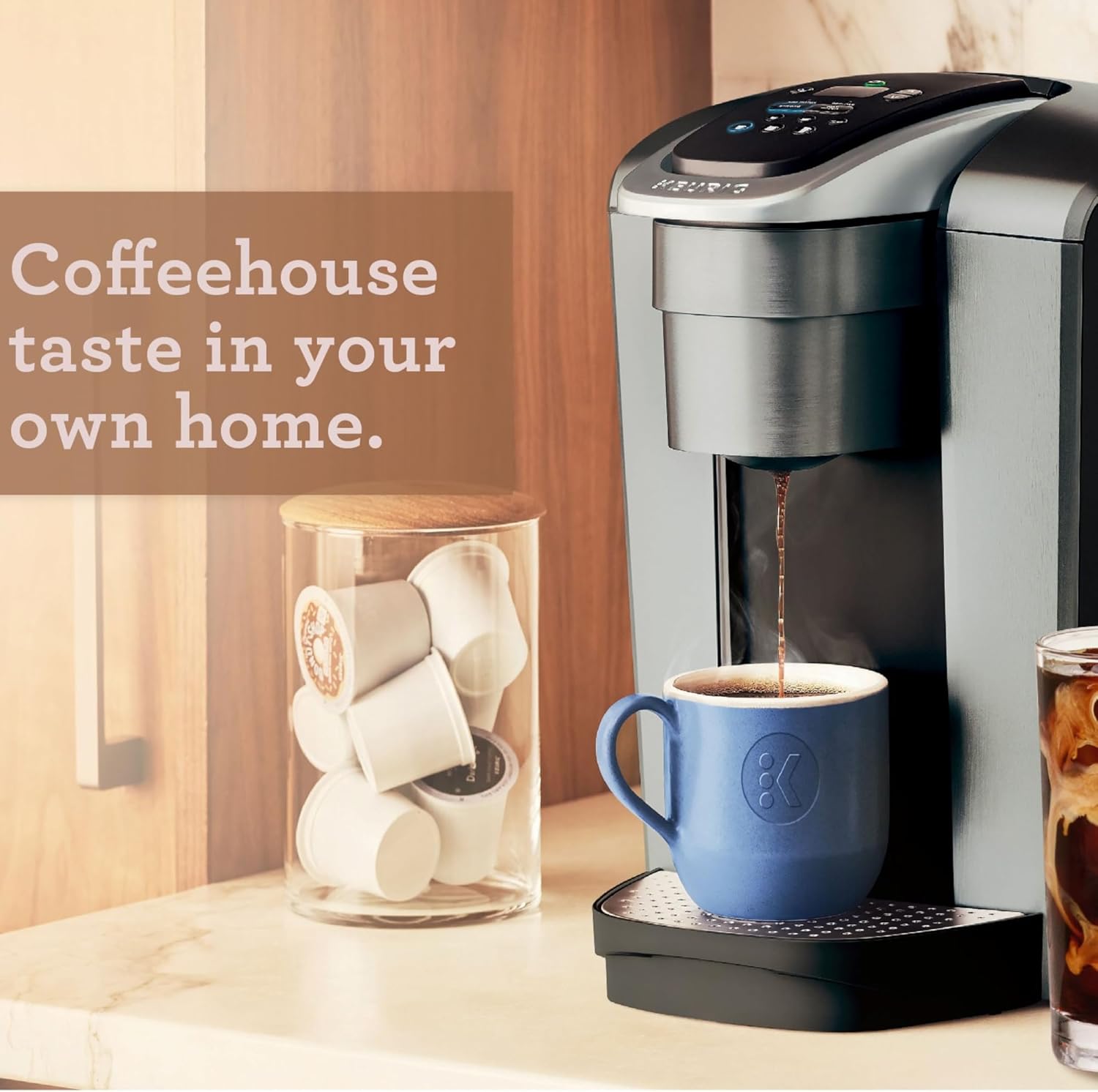
1.1. The Executive Choice: Keurig K-Elite

specs
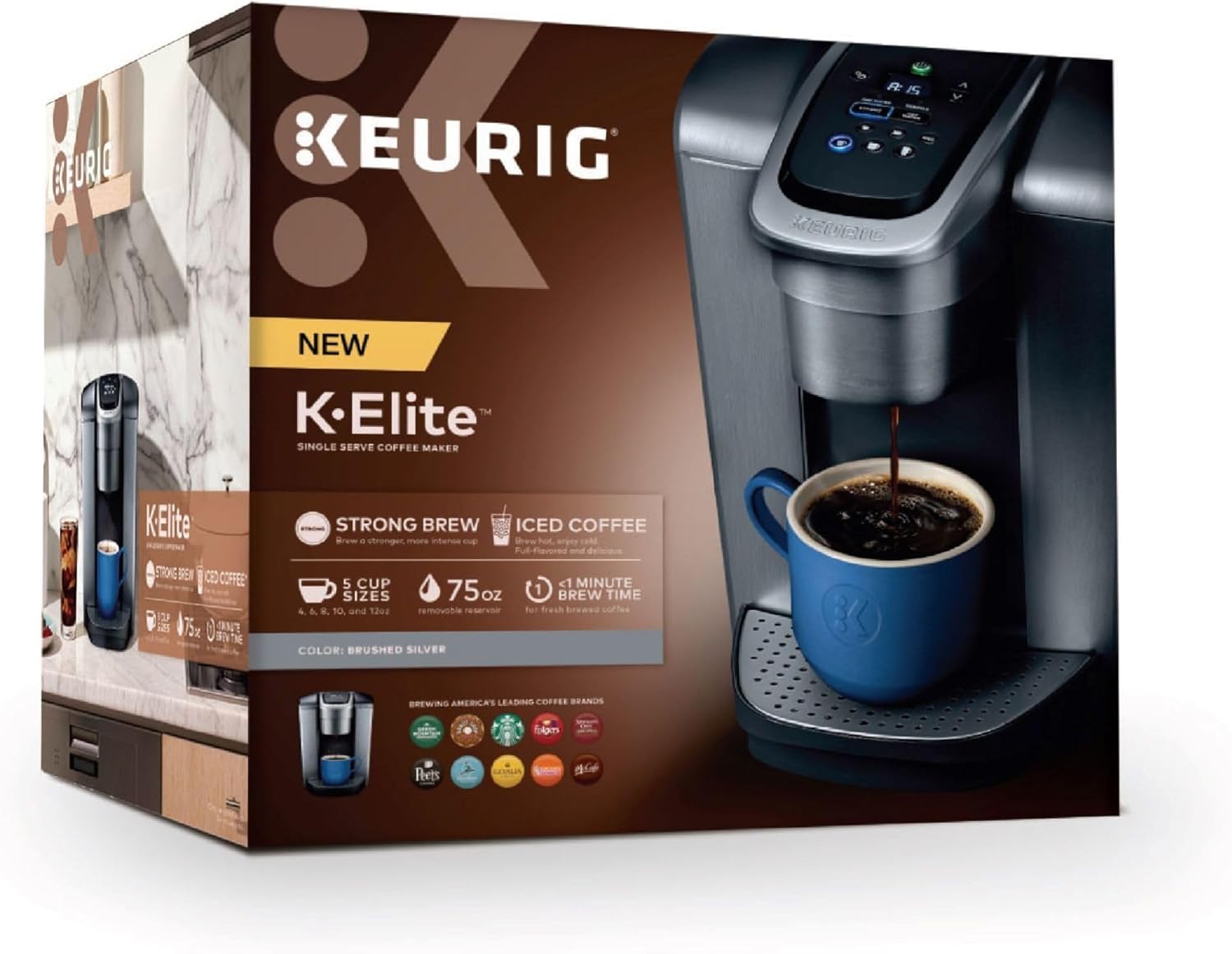
⭐ Water Reservoir: 75 oz removable reservoir — brews up to 8 cups before refilling.
⭐ Brew Sizes: 5 cup sizes — 4, 6, 8, 10, and 12 oz.
⭐ Temperature Control: Adjustable brew temperature (187°F – 192°F) for customized heat.
⭐ Strong & Iced Settings: Includes Strong Brew button for bolder flavor and Iced setting optimized for coffee over ice.
pros
✅ Customizable coffee strength and temperature: Adjust for bold flavor or heat that suits your preference.
✅ Large water reservoir: The removable 75 oz tank lets you brew multiple cups before refilling.
✅ Convenient programmable features: Auto-on/off and quick brew under a minute streamline your morning routine.
✅ Versatile settings: Brew hot beverages, iced coffee, and dispense hot water on demand for tea or oatmeal.
The Keurig K-Elite is the machine for people who want it all. It’s a sleek, brushed-metal beast that looks like it belongs in a high-end office or a modern kitchen. It’s packed with features that I initially thought were gimmicks but quickly realized were essential—like the “Strong Brew” button and the “Iced” setting. With a massive 75-ounce reservoir, it’s built for heavy users.
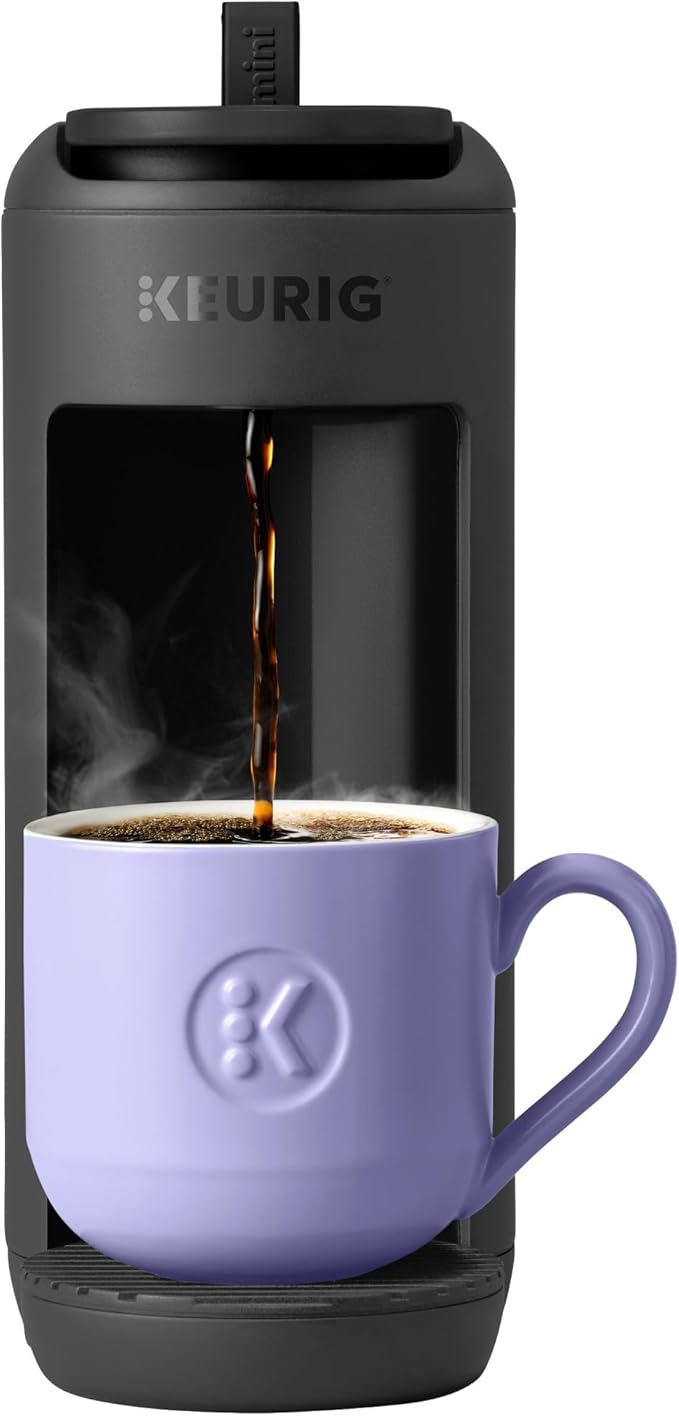
1.2. The Minimalist: Keurig K-Mini
specs
⭐ Brewing Capacity: Brews a single cup up to 12 oz per use (ideal for personal coffee).
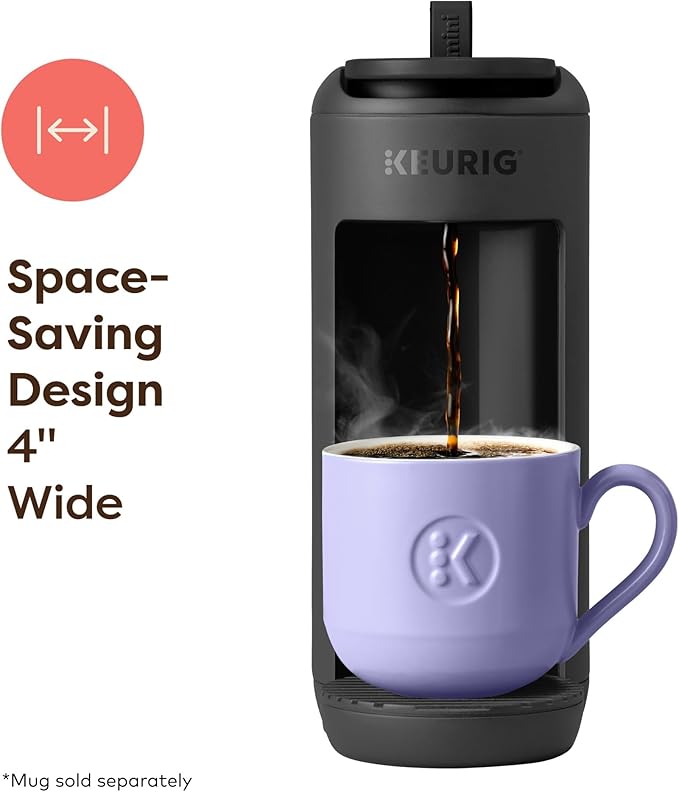
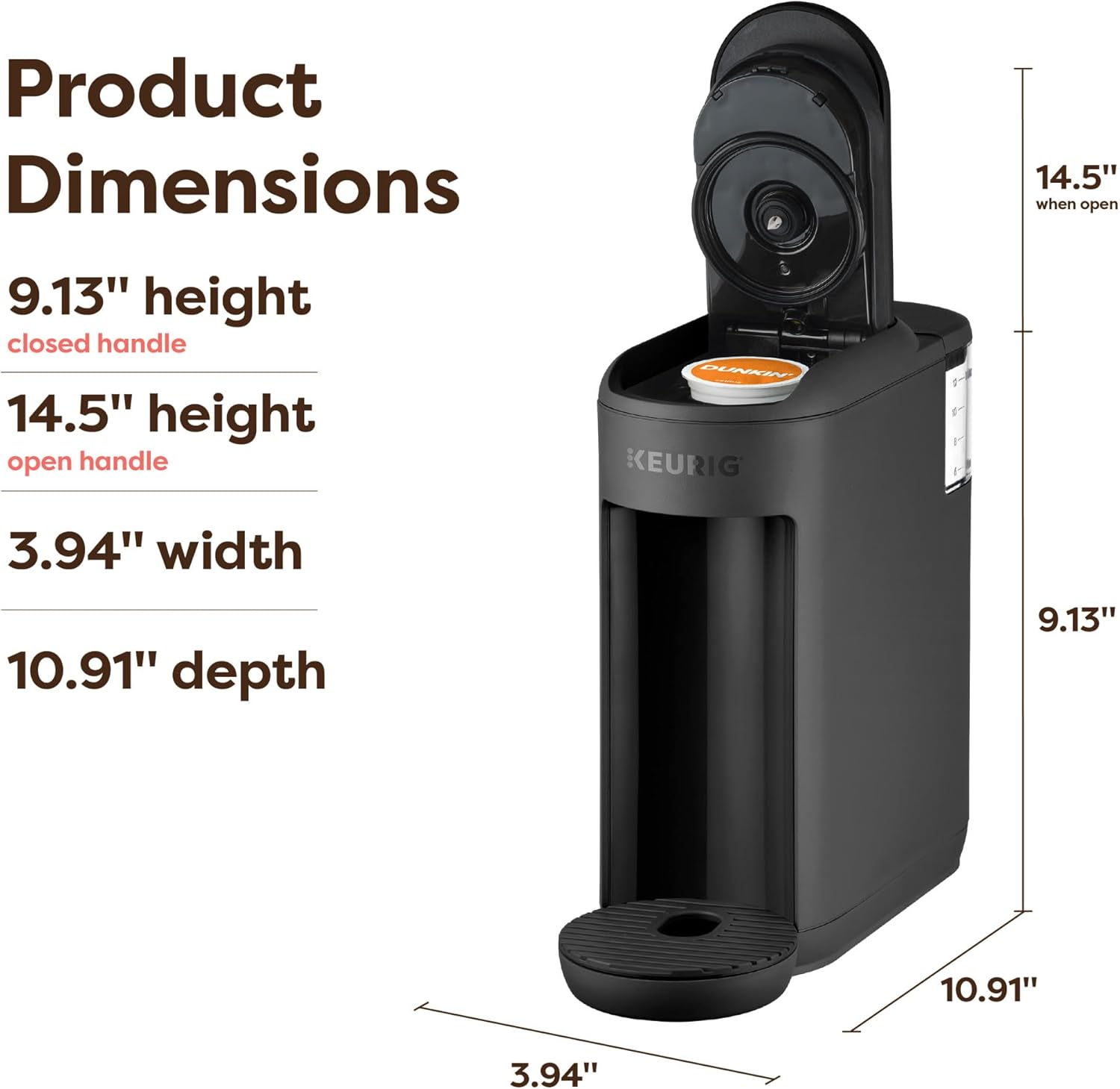
⭐ Design: Ultra-compact footprint ~4″ wide — great for kitchens, dorms, offices, or small counters.
⭐ Travel Mug Friendly: Fits travel mugs up to 7.25 inches tall for on-the-go convenience.
⭐ Water Reservoir: One-cup reservoir — refill for each brew session (no large tank).
pros
✅ Ultra-space-saving design: One of the smallest Keurig brewers, perfect for tight spaces like offices or dorm rooms.
✅ Fast, convenient brewing: Prepares a fresh cup in just a couple of minutes with very simple operation.
✅ Travel mug compatible: Lets you brew directly into taller travel cups — ideal for commuters.
✅ Super easy to use: No complicated settings — just add water and insert a K-Cup pod.
The Keurig K-Mini is the polar opposite. It’s tiny—less than five inches wide—and has a “one cup at a time” philosophy. There’s no reservoir; you pour in exactly what you want to brew. It’s designed for small apartments, dorm rooms, or even a desk at work. It’s simple, portable, and surprisingly stylish.
1.3. The Legend: Keurig K-Classic
specs
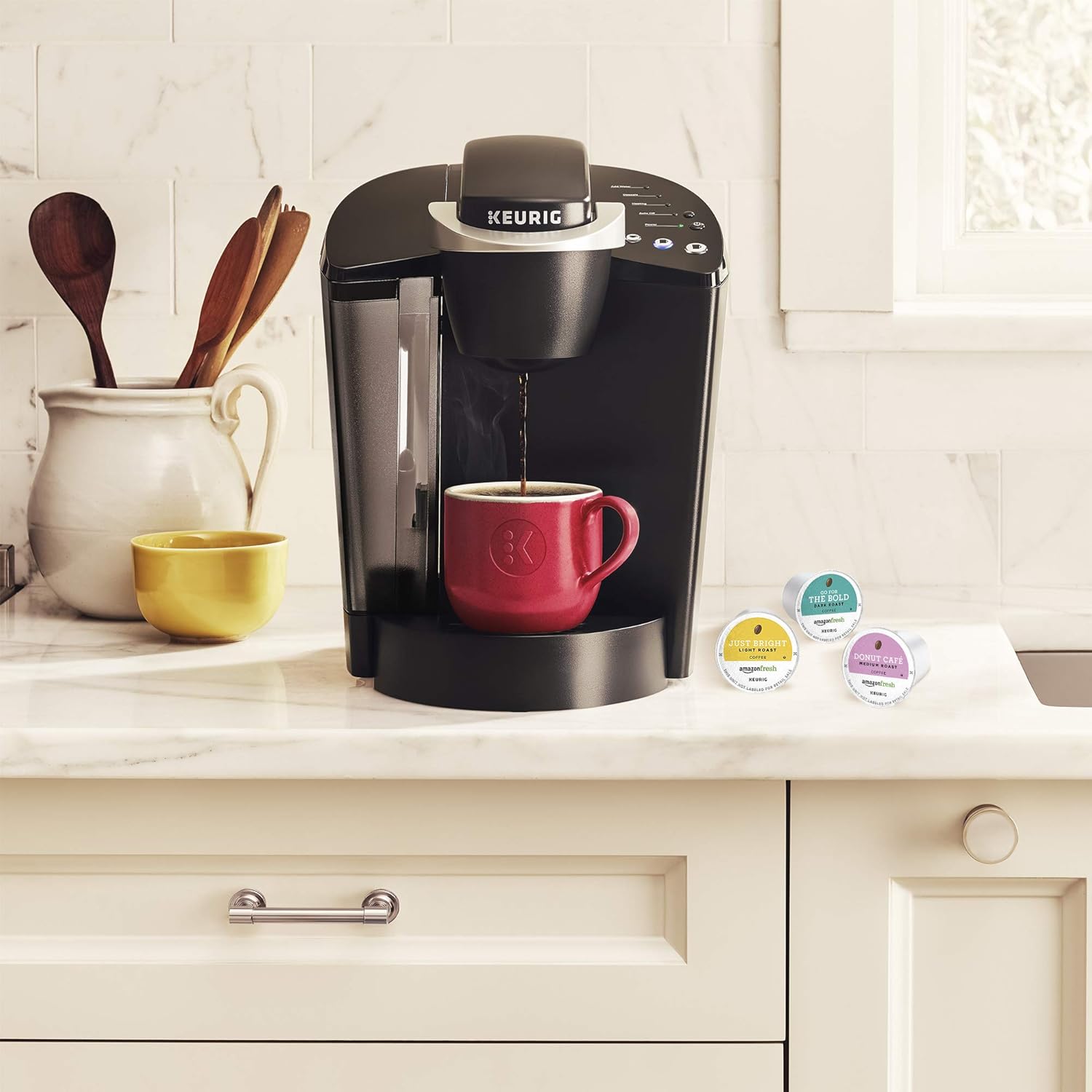
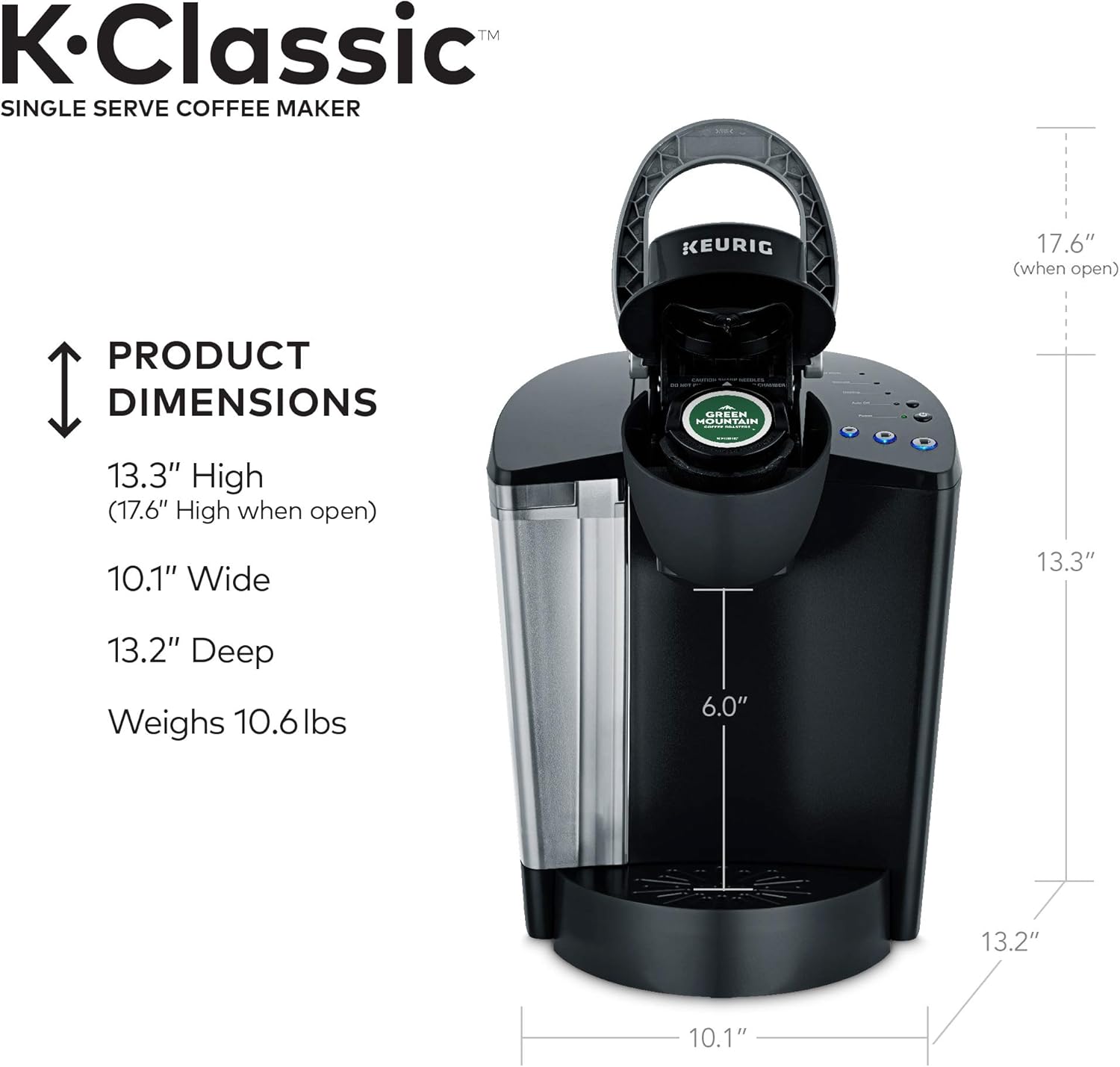
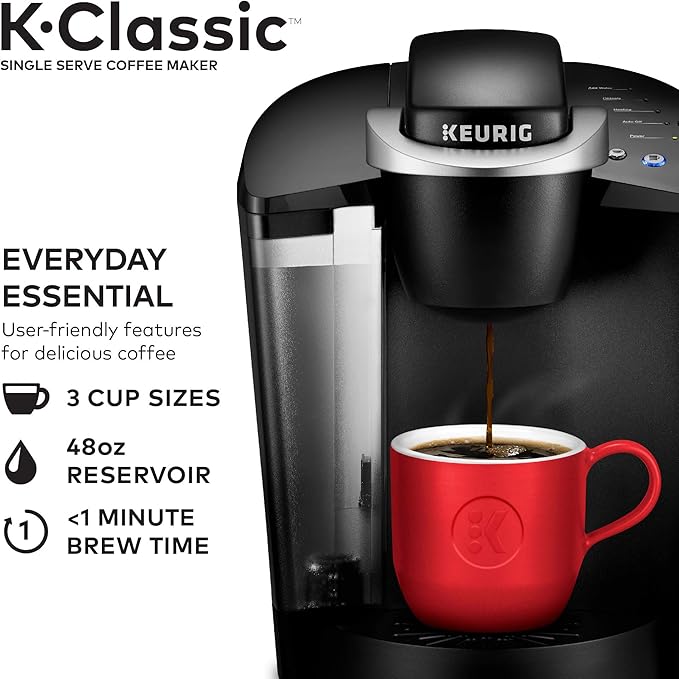
⭐ Brew Sizes: Offers three preset cup sizes — 6 oz, 8 oz, and 10 oz — for customizable strength and serving.
⭐ Water Reservoir: 48 oz removable water tank — brews multiple cups before refilling.
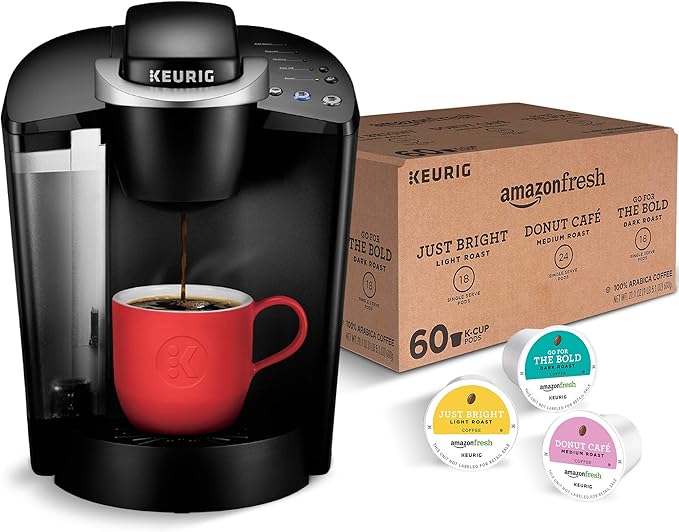
⭐ Included Coffee: 60-count AmazonFresh K-Cup Variety Pack with light, medium, and dark coffee roasts.
⭐ Auto-Off Feature: Automatically powers off after ~2 hours of inactivity for energy savings.
pros
✅ Bundle value: Includes a variety pack of 60 AmazonFresh coffee pods (light, medium, and dark roasts) — perfect for sampling different flavors.
✅ Quick and convenient brewing: Brews coffee in under a minute with simple button operation — ideal for busy mornings.
✅ Large water reservoir: The generous 48 oz tank lets you brew 4–6 cups before refilling, making it useful for households or small offices.
✅ User-friendly design: Removable reservoir and intuitive controls make setup, refilling, and cleaning easy.
The Keurig K-Classic is the machine that started the revolution. It’s the “standard” Keurig that you’ve probably seen in a million breakrooms. It’s a bit bulkier than the others, with a simple three-button interface. It’s known for being a reliable workhorse that just works, day after day.
Part 2: The Morning Rush – Speed and Convenience Testing
In 2026, time is the ultimate currency. I timed each machine from the moment I pressed “Power” to the moment the last drop of coffee hit my mug.
2.1. The K-Elite: The Speed Demon
“The K-Elite is built for the morning rush,” Bobby noted. “Because it keeps a large amount of water pre-heated in its internal tank, the actual brew time is incredibly fast. From the moment I hit the button, I had a steaming 12-ounce cup in under 60 seconds.”
The 3-second heat-up time is a game-changer. I could walk into the kitchen, pop a pod in, and by the time I’d grabbed my travel mug, the machine was ready to go. It’s the most “instant” experience of the three.
2.2. The K-Mini: The Patient Brewer
The K-Mini takes a different approach. Since it doesn’t have a reservoir, it has to heat the water from scratch for every single cup.
“It’s definitely the slowest,” Bobby observed. “It takes about two minutes to heat and brew. In the grand scheme of things, two minutes isn’t much, but when you’re running late for a Zoom call, it feels like a lifetime. However, the trade-off is that you’re always using fresh water, which some people swear by for taste.”
2.3. The K-Classic: The Steady Performer
The K-Classic falls right in the middle. It takes about 4 minutes to heat up the entire reservoir when you first turn it on. Once it’s hot, the brew time is about a minute.
“If you leave it on all morning, it’s fast,” Bobby said. “But if you’re turning it on for just one cup, you have to factor in that initial warm-up. It’s predictable, but it lacks the ‘instant-on’ feel of the Elite.”
Part 3: The Flavor Profile – Can a Pod Really Taste Good?
This was the biggest hurdle for me. As a former pour-over enthusiast, I was looking for a machine that could actually extract the nuances of the coffee.
3.1. The K-Elite’s “Strong Brew” Advantage
The K-Elite has a dedicated “Strong” button. I was skeptical at first, thinking it was just a marketing term.
“I was wrong,” Bobby admitted. “The ‘Strong’ setting actually changes the way the water flows through the pod. It pulses the water, allowing for more contact time with the grounds. The result is a noticeably richer, bolder cup of coffee. It’s the closest I’ve felt a K-Cup get to a traditional drip brew. For me, this is what makes it the best k cup coffee maker for serious coffee drinkers.”
3.2. The K-Mini: Consistency is Key
The K-Mini doesn’t have a “Strong” button, but because you control the water amount so precisely, you can “hack” the strength. If I wanted a bolder cup, I’d just pour in 6 ounces of water instead of 10. The flavor was consistently hot and fresh, though it lacked the depth that the Elite’s pulsing technology provides.
3.3. The K-Classic: The Baseline
The K-Classic delivers the “standard” Keurig experience. It’s a good, solid cup of coffee, but it lacks the customization of the Elite. You get three sizes (6, 8, and 10 oz), and that’s it. It’s perfectly fine for a casual drinker, but if you’re looking for a specific flavor profile, you might find it a bit limiting.
Part 4: Living with the Machines – Noise, Maintenance, and “The Slime Factor”
A coffee maker is a long-term commitment. I wanted to know what it was like to actually maintain these things over several months.
4.1. The Noise Factor
•K-Elite: The quietest. It has “Quiet Brew Technology,” and it’s a noticeable difference. It’s a low hum that won’t wake up the whole house.
•K-Classic: The loudest. It has that classic “Keurig growl” as the pump works. It’s a bit nostalgic, but definitely not quiet.
•K-Mini: Somewhere in the middle. It’s a bit noisy as it heats the water, but the brew itself is relatively quiet.
4.2. The Cleaning Routine
“Cleaning is where the K-Mini shines,” Bobby said. “Because there’s no reservoir, there’s no place for water to sit and get ‘slimy.’ You just wipe it down and you’re done.”
The K-Elite and K-Classic both have large reservoirs that need to be washed regularly. The K-Elite has a “Descale” alert that’s very helpful, but you do have to be diligent about cleaning that 75-ounce tank. I found that using filtered water significantly reduced the amount of scale buildup in all three machines.
Part 5: Bobby’s Final Verdict – Which One Should You Buy?
After months of testing, I’ve realized that the best k cup coffee maker isn’t a single machine—it’s the one that fits your specific life in 2026.
5.1. The Overall Winner: Keurig K-Elite
If you have the space and you drink more than two cups a day, the Keurig K-Elite is the definitive choice. The “Strong Brew” feature, the massive reservoir, and the sheer speed make it the most professional-feeling machine of the bunch. It’s the one that finally made me stop missing my pour-over setup.
5.2. The Best for Small Spaces: Keurig K-Mini
If you’re living in a studio apartment or want a dedicated machine for your home office, the K-Mini is a no-brainer. It’s stylish, it’s tiny, and it makes a great cup of coffee. Just be prepared for the two-minute wait.
5.3. The Best for the Budget-Conscious: Keurig K-Classic
If you just want a reliable machine that does the job without any frills, the K-Classic is still a great option. It’s a workhorse that will likely last you for years. It’s the “old reliable” for a reason.
Part 6: Frequently Asked Questions
6.1. Can I use my own coffee in these machines?
Yes! All three are compatible with the “My K-Cup” reusable filter. This is a great way to save money and reduce waste.
6.2. How often should I descale?
Keurig recommends every 3 to 6 months. If you notice the brew time slowing down or the coffee isn’t as hot, it’s time to descale.
6.3. Is the “Strong Brew” button worth the extra money?
In my opinion, yes. If you like dark roasts or find standard pod coffee to be a bit “thin,” the Strong setting on the K-Elite makes a world of difference.
Conclusion: Reclaiming Your Morning
Choosing the best k cup coffee maker is about more than just caffeine; it’s about reclaiming your time. For me, the K-Elite turned my morning from a rushed chore into a moment of genuine enjoyment. I no longer waste coffee, I don’t have to wait for a pot to brew, and I get a cup that actually tastes the way I want it to.
Whether you choose the powerhouse Elite, the tiny Mini, or the classic Classic, you’re making an investment in your daily routine. And in 2026, a better morning is always worth it.
Part 7: The Science of the Pod – Why Consistency Matters
To truly understand why these machines are so popular in 2026, we have to look at the engineering behind the K-Cup itself. It’s not just about convenience; it’s about the science of pressurized extraction.
7.1. The Pressurized Extraction Process
Unlike a traditional drip pot where water simply falls through the grounds, a Keurig uses a pressurized system. The machine punctures the top and bottom of the pod and forces hot water through at a specific pressure. This ensures that every single ground is saturated and extracted evenly.
“This is why the K-Elite’s ‘Strong’ button is so effective,” Bobby explained. “By slowing down that pressure, the water stays in contact with the grounds for longer, pulling out those deeper, darker notes that you usually only get from a French press or a slow pour-over.”
7.2. Temperature Stability: The ThermoJet Secret
One of the biggest complaints about early single-serve machines was that the coffee wasn’t hot enough. Keurig solved this with their advanced heating elements. The K-Elite, in particular, allows you to adjust the brew temperature between 187 and 192 degrees.
“I tested this with a digital thermometer,” Bobby noted. “The K-Elite was consistently within one degree of its setting. The K-Classic was a bit more variable, usually landing around 185 degrees, which is still hot but lacks that ‘scalding’ kick that some people prefer.”
Part 8: Bobby’s “Torture Tests” – Pushing the Keurigs to the Limit
I didn’t just want to see how they handled a single cup. I wanted to see how they handled a busy Saturday morning with guests.
8.1. The “Back-to-Back” Challenge
I invited four friends over and tried to brew five cups as fast as possible on each machine.
•The K-Elite: Handled it like a pro. Because of the 75-ounce reservoir, I didn’t have to refill it once. The machine stayed hot and ready between every cup. Total time: 6 minutes.
•The K-Classic: Also did well, but I had to refill the reservoir after the fourth cup. The initial heat-up between cups was about 30 seconds. Total time: 9 minutes.
•The K-Mini: This was a struggle. Having to pour in fresh water for every cup and wait for it to heat from scratch made it a very slow process. Total time: 15 minutes.
“If you host people often, the K-Elite is the only way to go,” Bobby concluded. “The K-Mini is strictly a solo act.”
8.2. The “Iced Coffee” Test
The K-Elite has a dedicated “Iced” button. I compared it to the K-Classic by brewing a standard cup over a glass full of ice.
“The K-Elite’s iced setting is brilliant,” Bobby said. “It brews a smaller, more concentrated amount of coffee so that when the ice melts, it doesn’t taste watered down. The K-Classic’s cup was drinkable, but it felt thin and weak by the time I was halfway through.”
Part 9: The Environmental Question – Pods vs. Grounds in 2026
I can’t write a review of the best k cup coffee maker without addressing the elephant in the room: the environmental impact of K-Cups.
9.1. The Recyclable Shift
By 2026, Keurig has made a massive push to make 100% of their K-Cups recyclable. You just have to peel off the foil, compost the grounds, and toss the plastic cup in the bin.
“It’s a step in the right direction,” Bobby noted. “But for me, the real solution is the reusable ‘My K-Cup’ filter. I used it in all three machines during my testing. It works perfectly in the K-Elite and K-Classic. In the K-Mini, it’s a bit of a tight fit, but it still works.”
9.2. Cost Analysis: Pods vs. Reusable
If you’re worried about the cost of pods, the math is simple. A standard K-Cup costs about $0.50 to $0.75. Using your own grounds in a reusable filter brings that cost down to about $0.15 per cup. Over a year, that’s a savings of over $200—enough to pay for the K-Elite itself!
Part 10: Maintenance Deep Dive – Keeping the Brew Fresh
A Keurig is a precision instrument, and like any instrument, it needs tuning.
10.1. The Importance of Water Quality
“I noticed a huge difference in flavor when I switched from tap water to filtered water,” Bobby observed. “Tap water contains minerals that can not only affect the taste but also build up inside the machine’s heating elements.”
The K-Elite and K-Classic both have space for a charcoal water filter inside the reservoir. I highly recommend using them. They make the coffee taste cleaner and extend the life of your machine.
10.2. The Needle Cleaning Trick
If your machine starts brewing partial cups or the flow seems weak, it’s usually because a bit of coffee ground is stuck in the exit needle.
“I learned a great trick,” Bobby shared. “Take a paperclip, straighten it out, and gently poke it into the holes of the needle inside the pod holder. It clears out the blockage instantly. I had to do this once with the K-Classic during my month of testing, and it worked like a charm.”
Part 11: Final Thoughts – The Bobby Manuel Recommendation
After 30 days, 120 cups of coffee, and more caffeine than my doctor would probably recommend, I have my answer.
The search for the best k cup coffee maker led me to the Keurig K-Elite. It’s the machine that respects the coffee as much as it respects your time. It’s fast, it’s versatile, and it makes a cup that I actually look forward to drinking every single morning.
If you’re ready to upgrade your morning, don’t settle for the basic model. Go for the Elite. Your future, caffeinated self will thank you.





This information is going to help so many people who really need to hear this