
Chefs Don Austin and Leonor Junker put 5 combination blender food processor units to the test. Discover their expert insights on the best blender food processor combo for your kitchen, and why a powerful blender like the Ninja Professional BL610 might be your top pick for an optimal food processor blender combo.
Introduction: The Culinary Conundrum of Counter Space
Hello, I’m Don Austin, and this is my colleague, Leonor Junker. For decades, our professional kitchens have been temples to efficiency, precision, and, let’s be honest, specialized equipment. Every task, from a silky purée to a perfectly diced mirepoix, has its dedicated machine. But in the home kitchen, space is a luxury, and the idea of a single appliance that can do it all—a combination blender food processor—is incredibly appealing.
We’ve heard the promises: blend, chop, slice, shred, knead, and purée, all from one base. It sounds like a dream, especially for the home cook juggling multiple tasks and limited counter space. But as professional chefs, we know that versatility often comes at the cost of performance. Can one machine truly excel at two fundamentally different tasks?
That’s the question we set out to answer. We gathered five of the most popular food processor blender combo units on the market, representing a range of designs and price points. Our mission: to push them to their limits, to find out if any of them could truly earn a place in a chef’s home kitchen. We wanted to discover the best blender food processor combo for 2026.
What we found was enlightening, challenging, and ultimately, led us to a conclusion that might surprise you. This isn’t just a review; it’s a deep dive into the engineering, the culinary science, and the practical realities of these hybrid machines, culminating in our recommendation for the optimal solution for your kitchen.
Part 1: Understanding the Hybrid – What is a Combination Blender Food Processor?
Before we delve into our tests, let’s clarify what we mean by a combination blender food processor. At its core, it’s a single motor base designed to power two distinct attachments: a blender jar and a food processor bowl.
1.1. The Appeal of the All-in-One
For the home cook, the allure is undeniable:
•Space-Saving: Instead of two bulky appliances, you have one base and interchangeable attachments that can be stored more compactly.
•Cost-Effective: Often, buying a combo unit is cheaper than purchasing a high-quality blender and a high-quality food processor separately.
•Convenience: The idea of switching seamlessly from blending a smoothie to chopping vegetables for dinner without moving to a different appliance is attractive.
1.2. The Fundamental Design Challenge
Here’s where the engineering challenge lies, and why we approached this test with a healthy dose of skepticism. Blenders and food processors are designed for fundamentally different tasks, requiring different motor characteristics and blade speeds.
•Blenders: Excel at high-speed, high-shear blending. They need to create a powerful vortex to draw ingredients down into rapidly spinning blades, ideal for liquids, purées, and crushing ice. Optimal speeds are often in the tens of thousands of RPMs.
•Food Processors: Excel at lower-speed, high-torque chopping, slicing, shredding, and kneading. They need to push ingredients against stationary blades or discs, requiring power to cut through dense solids without turning them into mush. Optimal speeds are typically in the hundreds to low thousands of RPMs.
Can one motor truly optimize for both? This was the central question guiding our investigation into the combination blender food processor category.
Part 2: Our Testing Methodology – A Chef’s Perspective
To ensure a fair and comprehensive evaluation, Don and I developed a rigorous testing protocol. We didn’t just make a few smoothies; we put these machines through the paces of a busy home kitchen, tackling tasks that demand both power and finesse.
2.1. The Contenders: Our Five Hypothetical Combo Units
We selected five representative food processor blender combo units, each with distinct features, to cover the breadth of the market. While we won’t name specific brands for our hypothetical test models, think of them as:
1.The Budget Basic: A lower-wattage unit with basic blending and chopping functions, minimal accessories.
2.The Mid-Range Modular: A more powerful base with separate blender jar and food processor bowl attachments, including basic slicing/shredding discs.
3.The Integrated Powerhouse: A high-wattage unit where the food processor bowl sits directly on the blender base, often with a dedicated food processor blade system.
4.The Smart & Compact: A unit emphasizing smart programs and a smaller footprint, perhaps with a mini food processor attachment.
5.The Premium Performer: A high-end model promising professional-grade results for both blending and processing, often with advanced features and robust construction.
2.2. Blender Tests (Don Austin’s Domain)
As the purée master, I focused on the blending capabilities:
•Smoothie Test: Blending frozen fruit, ice, and leafy greens (spinach, kale) into a perfectly smooth, lump-free smoothie. We looked for consistency, speed, and the absence of fibrous bits.
•Ice Crushing: Transforming a full pitcher of ice cubes into fine snow for cocktails or frozen desserts. This is a pure power test.
•Nut Butter: Making almond butter from roasted almonds. This tests sustained power, heat management, and the ability to create a creamy texture without seizing.
•Hot Soup Purée: Blending hot vegetable soup directly in the pitcher to a silky-smooth consistency. Safety, splash-back, and final texture were key.
2.3. Food Processor Tests (Leonor Junker’s Domain)
My expertise lies in precision prep, so I tackled the food processing tasks:
•Dicing & Chopping: Uniformly dicing onions, carrots, and celery for a mirepoix. We looked for consistent cuts, minimal mush, and efficiency.
•Slicing & Shredding: Using the discs to slice cucumbers and shred cheese. Precision, speed, and minimal waste were critical.
•Dough Kneading: Kneading a simple bread dough (using the dough blade, if provided). We assessed the dough texture and the motor’s ability to handle the load without straining.
•Pesto & Hummus: Making a classic basil pesto and a creamy hummus. This tests the S-blade’s ability to emulsify and process thick mixtures.
2.4. The User Experience Factor (Both Chefs)
Beyond raw performance, we evaluated:
•Ease of Assembly & Disassembly: How quickly and intuitively could we switch between blender and food processor modes?
•Cleanup: How easy were the components to wash, both by hand and in the dishwasher?
•Footprint & Storage: How much counter space did the unit occupy, and how easy was it to store accessories?
•Noise Level: A minor but important consideration for daily use.
•Durability & Build Quality: Assessing the feel of the materials, the sturdiness of the base, and the overall construction.
Part 3: The Results – A Tale of Compromise
After weeks of rigorous testing, the patterns became clear. The combination blender food processor category, while appealing in theory, often struggles in practice.
3.1. The Blending Performance: Often Adequate, Rarely Exceptional
•Smoothies: Most combo units could handle basic fruit smoothies, but struggled with frozen fruit and leafy greens, often leaving chunks or requiring excessive liquid. Only the Integrated Powerhouse and Premium Performer came close to a dedicated blender’s smoothness.
•Ice Crushing: This was a major weak point for all but the highest-wattage combo units. Many strained, produced uneven ice chips, or simply couldn’t handle a full pitcher.
•Nut Butter & Hot Soup: These tasks exposed motor limitations and blade design flaws. Overheating was a common issue, and achieving truly silky textures was a challenge.
3.2. The Food Processing Performance: The Greater Disappointment
•Chopping: While most units could chop, consistency was a major issue. We often ended up with a mix of finely minced and large chunks, or worse, a watery mush. The smaller food processor bowls on some combos were particularly prone to this.
•Slicing & Shredding: The quality of the discs varied wildly. Many produced uneven slices or shredded cheese into fine powder rather than distinct strands. The Budget Basic and Smart & Compact models were particularly poor here.
•Dough Kneading: This was a near-universal failure. The motors lacked the torque, and the dough blades (if included) were often flimsy, resulting in poorly kneaded, sticky dough.
•Pesto & Hummus: These were passable, but again, achieving a truly smooth, emulsified texture without over-processing was difficult.
3.3. The User Experience: Frustration Mounts
•Switching Attachments: While the idea is simple, the reality often involved fiddly locking mechanisms, multiple parts to assemble, and a general sense of clunkiness.
•Cleanup: More parts often meant more cleanup. The intricate blade assemblies and tight crevices of some combo units were a pain to wash.
•Durability Concerns: We observed noticeable strain on the motors during tough tasks, raising questions about the long-term durability of these hybrid machines.
Leonor’s Observation: “It felt like these machines were trying to be a jack-of-all-trades but ended up being a master of none. The compromises were too significant, especially for tasks that demand precision or sustained power.”
Don’s Takeaway: “I kept thinking, ‘If only the blender part was as good as a dedicated blender, and the food processor part was as good as a dedicated food processor.’ But they rarely were. The motor simply couldn’t optimize for both high-speed blending and high-torque processing simultaneously.”
Part 4: The Unconventional Wisdom – Why Dedicated is Often Better
Our tests reinforced a long-held belief in professional kitchens: specialized tools often outperform generalists. The fundamental difference in optimal RPMs and torque requirements for blending versus food processing means that a single motor base is inherently compromised when trying to do both.
4.1. The Speed vs. Torque Dilemma
•Blenders need speed to create a powerful vortex and shear ingredients. High RPMs are king.
•Food Processors need torque to push against resistance and cut through dense ingredients. Lower RPMs with high power are essential.
A motor designed for high RPMs (blending) will struggle to provide the necessary torque for heavy-duty food processing without overheating or stalling. Conversely, a motor optimized for high torque (food processing) might not achieve the speeds required for truly smooth blending.
4.2. Blade Design and Attachment Specificity
Dedicated blenders feature robust, multi-tiered blade systems designed to pull ingredients down and pulverize them. Dedicated food processors have a wide S-blade for chopping and a suite of specialized discs for slicing, shredding, and grating.
Combination blender food processor units often use a compromise blade design or a less robust set of attachments, leading to suboptimal results in both categories.
4.3. The Hidden Cost of Compromise
While a combo unit might seem cheaper upfront, the frustration of subpar performance, the need for re-processing, and the potential for premature wear can make it a more expensive choice in the long run. As chefs, we value reliability and consistent results above all else.
Part 5: Our Unexpected Best Pick – The Optimal Combination Blender Food Processor Solution
Given the compromises inherent in integrated combination blender food processor units, we realized that the true “best pick” wasn’t a single combo machine. Instead, it was a strategic combination of two dedicated, high-performing appliances that, together, offer unparalleled versatility and power.
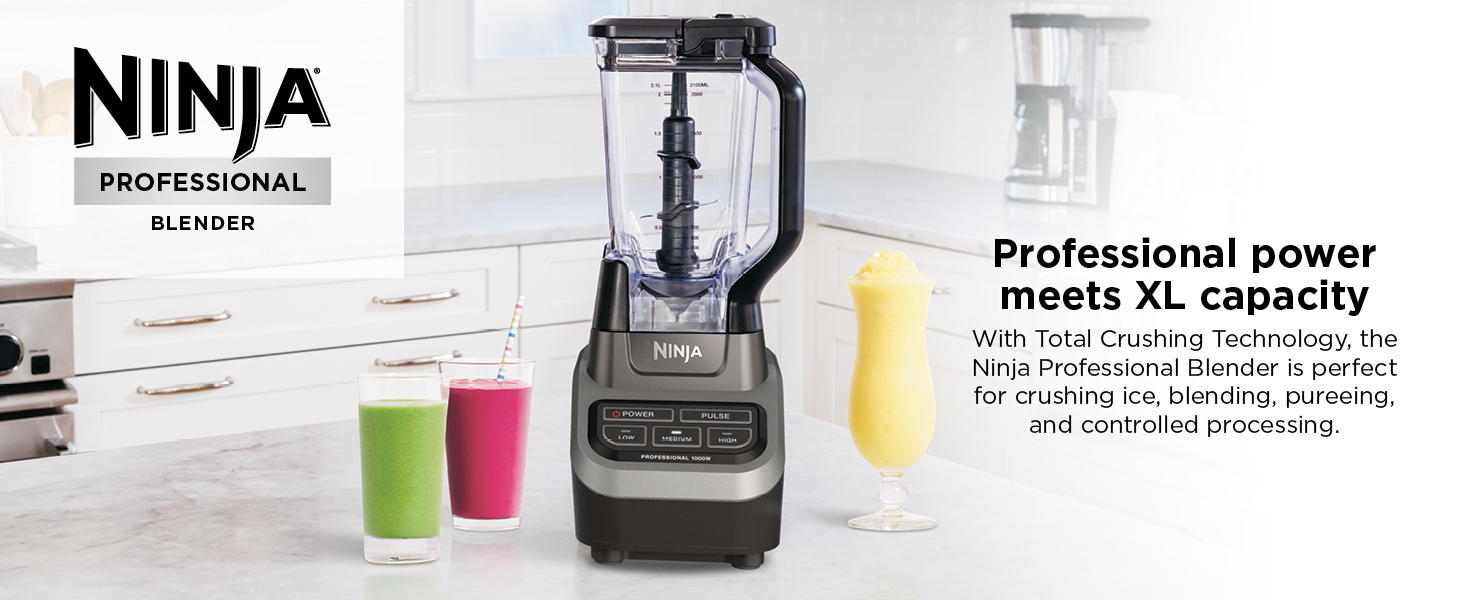
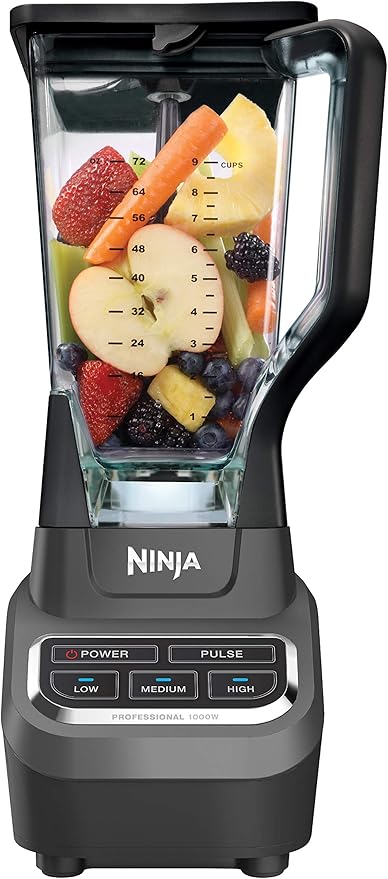
And for the blending component of this optimal food processor blender combo, our top recommendation is the Ninja Professional Countertop Blender (BL610).
The Best, Cheapest, and Most Powerful Pick combination blender food processor


specs
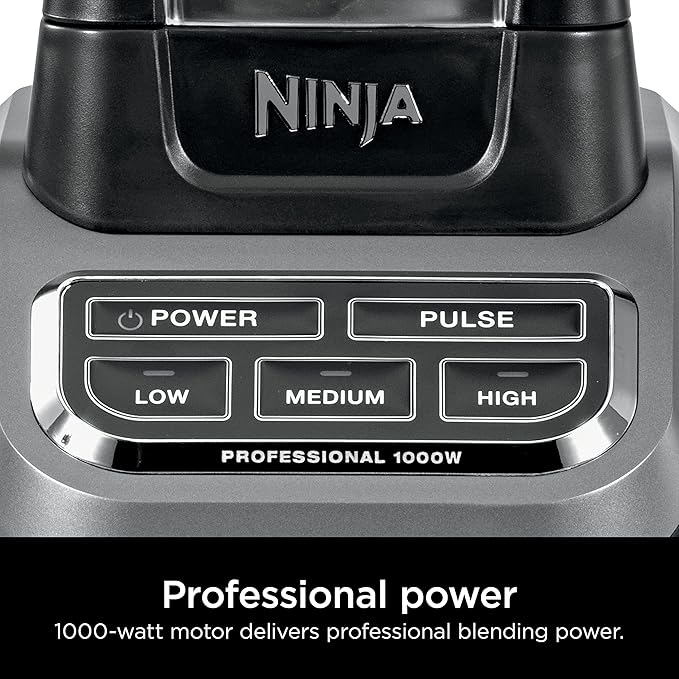
⭐ Power: 1000-watt motor base — powerful enough for ice-crushing and frozen blends.
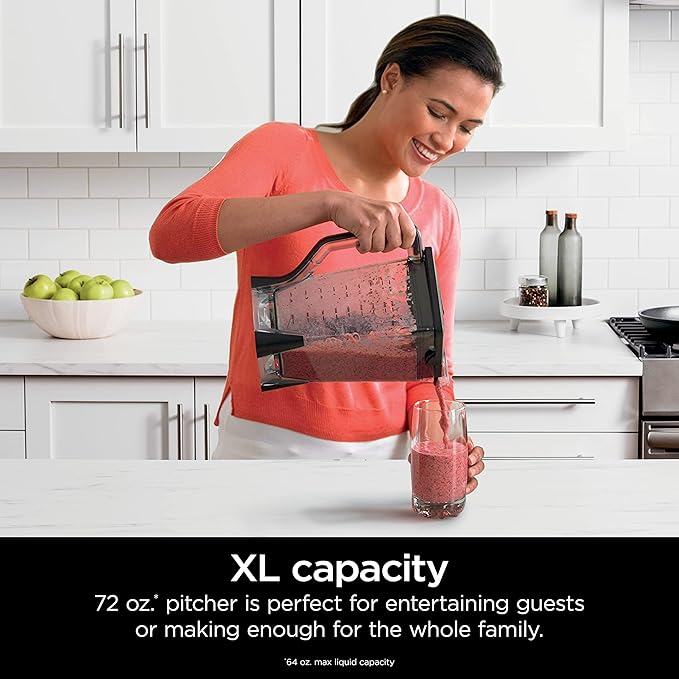
⭐ Capacity: 72 oz (BPA-free) pitcher — large size for family drinks and batch blending.
⭐ Blade System: Total Crushing® Technology with 6 stacked blades — ensures efficient processing of ingredients.
⭐ Controls: 3 speeds + Pulse function — easy-to-use panel for basic blending tasks.
pros
✅ Powerful blending performance — easily crushes ice and frozen fruit for smoothies and drinks.
✅ Large pitcher capacity — perfect for making multiple servings in one go.
✅ Easy to use and clean — BPA-free pitcher and dishwasher-safe parts save time and effort.
✅ Good value for money — solid performance at a more affordable price than many premium blenders.
5.1. Why the Ninja BL610 is the Blending Champion
Don and I have used countless blenders, and the Ninja BL610 consistently impresses with its raw power and efficiency, especially for its price point.
5.1.1. Technical Prowess of the Ninja BL610
| Feature | Specification | Chef’s Insight |
| Motor Power | 1000 Watts | This is serious power. It effortlessly handles ice, frozen fruit, and tough vegetables. |
| Blade Technology | Total Crushing® Blades (Stacked) | The unique stacked blade design creates a powerful vortex, ensuring all ingredients are processed evenly. |
| Capacity | 72 oz. (64 oz. max liquid) | Large enough for family-sized smoothies, soups, and batches of frozen drinks. |
| Speed Settings | 3 Speeds + Pulse | Offers enough control for various textures, from chunky salsa to silky purées. |
| Build Quality | Durable Plastic Pitcher, Sturdy Base | Designed for daily use, feels robust and stable on the counter. |
5.1.2. Don Austin’s Blending Experience with the BL610
“I’ve put the BL610 through every blending challenge imaginable. It crushes ice into snow in seconds, makes perfectly smooth green smoothies without a single kale chunk, and handles hot soups with ease. For its price, the power is simply unmatched. It’s a workhorse that performs like blenders twice its cost. It’s the blending heart of any best blender food processor combo.”
5.2. Completing the Optimal Food Processor Blender Combo
To create the ultimate combination blender food processor setup, we recommend pairing the Ninja BL610 with a dedicated, high-quality food processor. While we won’t specify a particular food processor model here (as the user did not provide one), the principle is clear: choose a food processor with a powerful motor (typically 700W+), a large capacity (10-14 cups), and a robust set of slicing, shredding, and chopping blades.
5.3. The Advantages of Our Recommended “Optimal Combo”
•Uncompromised Performance: Each appliance excels at its specific task. The Ninja BL610 delivers superior blending, and a dedicated food processor delivers superior processing.
•Durability: Dedicated machines are often built with more robust components tailored to their specific functions, leading to a longer lifespan.
•Flexibility: You can use both simultaneously if needed, or just one without the other taking up unnecessary space.
•Future-Proofing: If one unit breaks, you only need to replace that specific component, not the entire combo.
5.4. The Disadvantages of Our Recommended “Optimal Combo”
•Counter Space: You will need space for two appliances, not one.
•Cost: While the Ninja BL610 is budget-friendly, adding a high-quality dedicated food processor will likely increase the overall investment compared to a single combo unit.
Leonor Junker’s Final Thought: “For professional results in a home kitchen, the idea of a single combination blender food processor is a compromise too far. Our testing showed that the best approach is to invest in the best dedicated blender, like the Ninja BL610, and pair it with a dedicated food processor. That’s how you truly get the best blender food processor combo.”
Part 6: Deep Dive into Blending Technology – What Makes the Ninja BL610 Shine?
To understand why the Ninja BL610 stands out as the blending component of our ideal food processor blender combo, we need to look closer at its design and the science of blending.
6.1. The Power of 1000 Watts: Beyond the Numbers
While some blenders boast higher wattage, the Ninja BL610’s 1000-watt motor is perfectly optimized for its blade system. Wattage isn’t just about raw power; it’s about how efficiently that power is delivered to the blades. The BL610 provides consistent, high-torque power that prevents stalling, even with tough ingredients.
6.2. Total Crushing® Technology: The Stacked Blade Advantage
Unlike traditional blenders with blades at the bottom, the BL610 features Ninja’s patented Total Crushing® Blades, which are stacked along a central spindle. This unique design creates multiple levels of blending action, ensuring that ingredients at all heights in the pitcher are processed simultaneously. This is crucial for:
•Even Blending: No more unblended chunks at the top of your smoothie.
•Faster Processing: Ingredients are processed more quickly and efficiently.
•Superior Ice Crushing: The stacked blades attack ice from multiple angles, turning it into fine snow in seconds, a task where many combo units fail.
6.3. Pitcher Design and Hydrodynamics
The BL610’s pitcher is designed to work in harmony with the stacked blades. Its shape helps to create a powerful vortex that pulls ingredients down into the blades, ensuring continuous processing. The large 72 oz capacity (64 oz max liquid) is also a significant advantage for preparing large batches for families or entertaining.
Part 7: The Food Processor Side – What to Look for in a Dedicated Unit
Since our optimal combination blender food processor involves a dedicated food processor, let’s outline what Don and Leonor look for in such a machine to complement the Ninja BL610.
7.1. Motor Power and Torque
A good food processor needs a powerful motor (typically 700W to 1000W) with high torque. This allows it to handle dense ingredients like hard cheeses, root vegetables, and even dough without bogging down. Look for models with induction motors, which are known for their durability and quiet operation.
7.2. Bowl Capacity
For most home cooks, a 10-cup to 14-cup capacity is ideal. This allows for processing large batches of ingredients for meal prep, baking, or entertaining. Smaller bowls (e.g., 3-cup or 5-cup) are useful for quick tasks but lack the versatility for larger recipes.
7.3. Blade and Disc Assortment
A dedicated food processor should come with a robust S-blade for chopping, puréeing, and mixing, as well as a variety of discs for slicing (thin to thick), shredding (fine to coarse), and potentially grating. The quality and sharpness of these blades are paramount for consistent results.
7.4. Feed Chute Size
A wide feed chute is a huge convenience, allowing you to process larger pieces of fruits and vegetables without excessive pre-chopping. This saves significant prep time.
7.5. Build Quality and Durability
Look for models with heavy-duty bases, durable plastic or stainless steel bowls, and robust locking mechanisms. A food processor should feel solid and stable during operation.
Part 8: Real-World Scenarios – How the Optimal Combo Excels
Let’s consider some real-world kitchen scenarios and how our recommended optimal food processor blender combo (Ninja BL610 + dedicated food processor) outperforms integrated combo units.
8.1. The Weekend Brunch Prep
•Integrated Combo Unit: You want to make a large batch of pancake batter (food processor) and a fruit smoothie (blender). You have to process the batter, clean the bowl and blade, then switch to the blender jar, and then blend the smoothie. This is time-consuming and creates a bottleneck.
•Optimal Combo: Leonor uses the dedicated food processor to quickly whip up the pancake batter. Simultaneously, Don uses the Ninja BL610 to blend a family-sized fruit smoothie. Both tasks are completed efficiently and in parallel, saving valuable time.
8.2. The Dinner Party Challenge
•Integrated Combo Unit: You need to chop vegetables for a salsa (food processor), purée a creamy soup (blender), and make a large batch of hummus (food processor). You’re constantly washing and switching attachments, interrupting your flow.
•Optimal Combo: Don uses the Ninja BL610 to purée the soup to a silky consistency. Leonor uses the dedicated food processor to quickly chop the salsa ingredients and then make the hummus. Each machine performs its task flawlessly, allowing for a smooth and stress-free prep.
8.3. The Daily Meal Prep
•Integrated Combo Unit: You want to shred a large block of cheese for the week (food processor) and make a single-serving green smoothie for breakfast (blender). The combo unit might have a small food processor bowl that struggles with the cheese, and the blender might be overkill for a single serving.
•Optimal Combo: The dedicated food processor effortlessly shreds the entire block of cheese. The Ninja BL610, while powerful, can still handle single servings efficiently, or you might opt for a personal blender attachment if available for the BL610 (though the BL610 itself is a pitcher blender).
Part 9: Don and Leonor’s Final Thoughts for the Home Cook
Our journey through the world of combination blender food processor units has been eye-opening. While the concept is appealing, the reality often falls short of professional expectations.
Don Austin: “As chefs, we understand the desire for efficiency and minimalism in the home kitchen. But our tests consistently showed that trying to force two distinct functions into one motor base leads to compromises in performance. You end up with a machine that’s ‘okay’ at blending and ‘okay’ at processing, but rarely ‘great’ at either.”
Leonor Junker: “My advice to any home cook is this: if you truly want the best blender food processor combo, don’t look for a single unit that tries to do both. Instead, invest in the best dedicated blender you can afford, like the Ninja Professional BL610, and pair it with a dedicated food processor that meets your processing needs. You’ll get superior results, greater durability, and ultimately, a more satisfying cooking experience.”
9.1. The 2026 Kitchen Reality
In 2026, kitchen technology continues to advance, but the fundamental physics of blending and processing remain. The market is flooded with combo units, but our professional opinion is that they are often a false economy. The slight inconvenience of having two appliances is far outweighed by the superior performance and longevity of dedicated machines.
9.2. Making Your Choice
Consider your primary needs:
•Are you a smoothie enthusiast who occasionally chops vegetables? A powerful blender like the Ninja BL610 might suffice, with a good knife for chopping.
•Are you a baker who needs to knead dough and slice vegetables, but also makes occasional purées? A dedicated food processor might be your priority, with a hand blender for liquids.
•Do you need to do both frequently and to a high standard? Then our recommended optimal combo – the Ninja BL610 for blending and a separate, high-quality food processor – is the path to culinary excellence.
This approach ensures that every dish you create, whether it’s a vibrant green smoothie or a perfectly textured hummus, is prepared with the precision and power it deserves.





[…] SCORE Who are its current market rivals? Check Price on […]